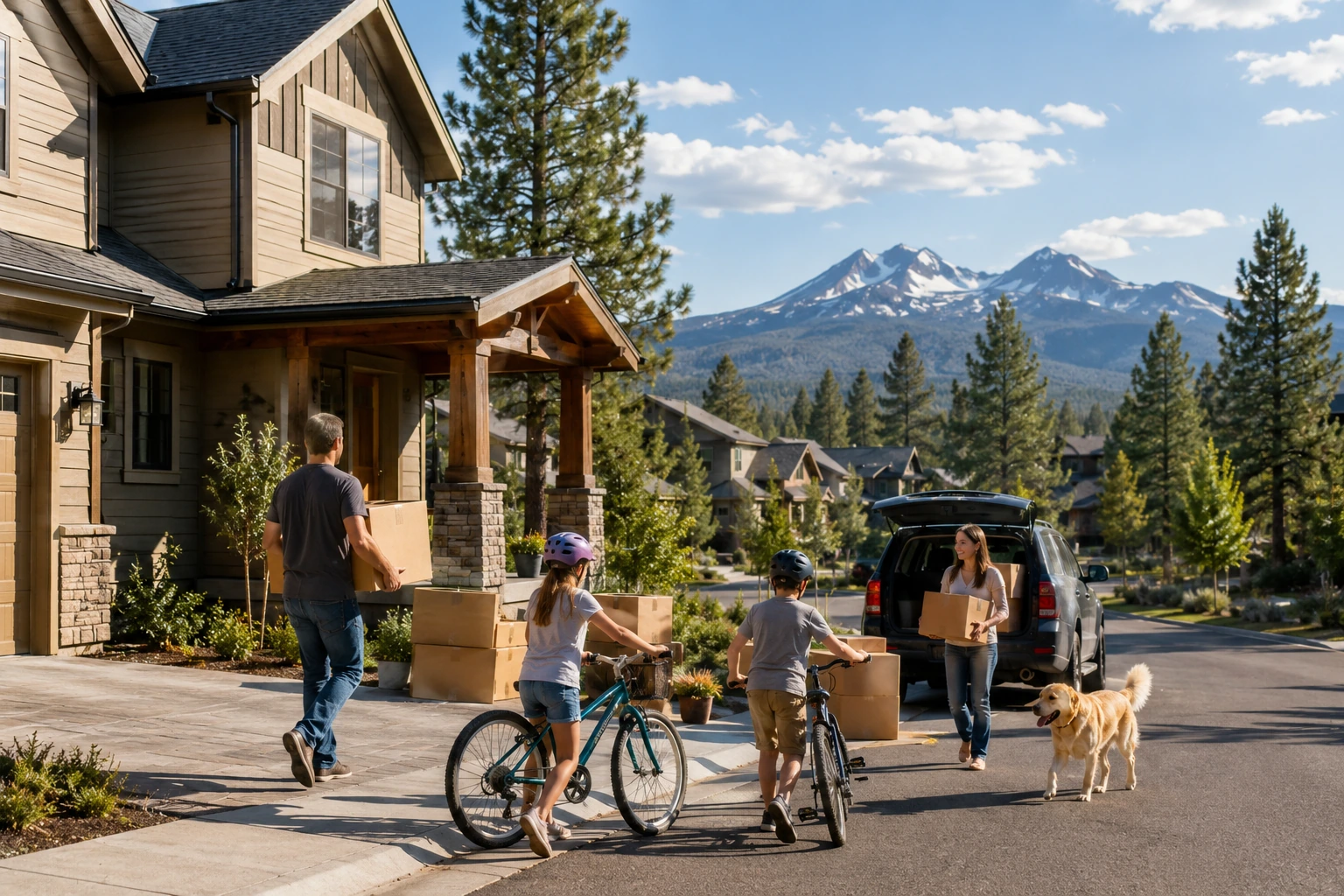
Moving to Bend with children involves more than finding a home near a good school. Families need to compare neighborhoods, commute patterns, childcare, healthcare, recreation, climate, housing costs, school boundaries, and the practical realities of starting over in a growing Central Oregon city.
Bend can offer a strong combination of parks, trails, sports, outdoor access, community programs, restaurants, libraries, and family-oriented neighborhoods. At the same time, housing can be expensive, childcare may require early planning, winter driving takes adjustment, and families moving from larger cities may find fewer specialized services.
This guide focuses on the complete relocation process rather than repeating a school-ranking article. It is designed to help parents connect housing, routines, work, transportation, healthcare, and children’s needs before choosing an address.
Quick Answer
Bend can be a good place for families who value outdoor recreation, parks, youth programs, community life, and access to Central Oregon’s natural environment.
The strongest relocation plan begins by identifying the family’s fixed requirements:
- Work location
- Housing budget
- School needs
- Childcare
- Healthcare
- Commute tolerance
- Activities
- Support network
- Home size
- Preferred lifestyle
Families should visit Bend during an ordinary school or work week rather than evaluating the city only during a vacation. A neighborhood that feels peaceful on Sunday may have school traffic, winter shade, construction, or a difficult weekday commute.

Is Bend a Good Place to Raise a Family?
Bend may be a strong fit for active households that want parks, trails, sports, swimming, skating, biking, camping, skiing, and outdoor family routines.
Bend Park and Recreation District currently offers more than 1,000 recreation programs annually for ages ranging from young children to older adults. Programs include aquatics, sports, arts, camps, outdoor activities, childcare, skating, and adaptive recreation.
The city may be less suitable for families needing low-cost housing, extensive public transportation, or immediate access to highly specialized services.
What Should Families Arrange First?
Prioritize:
- Employment and income
- Housing budget
- School-boundary research
- Childcare availability
- Healthcare providers
- Moving schedule
- Temporary housing, when needed
- Home financing
- Neighborhood visits
- Registration deadlines
Why Families Choose Bend
Families often choose Bend because it combines a mid-sized city with parks, recreation, schools, healthcare, neighborhood centers, and access to the outdoors.
Children can grow up near rivers, trails, mountains, sports facilities, pools, skating, camps, and nature areas. Parents may value remote-work opportunities, a strong outdoor culture, and a community where weekend recreation does not require long-distance travel.
Outdoor Access
Families can reach:
- Deschutes River trails
- Neighborhood parks
- Shevlin Park
- Cascade lakes
- Mt. Bachelor
- National forest trails
- Biking routes
- Camping
- Fishing
- Winter recreation
Outdoor access is a major advantage, but parents must also plan for wildfire smoke, summer heat, winter ice, cold mornings, and changing trail conditions.
Parks and Recreation
Bend Park and Recreation District provides pools, youth sports, camps, arts programs, outdoor classes, skating, childcare, and community events. Its natural play areas include locations such as Discovery Park, Compass Park, Pine Nursery Park, and Shevlin-area amenities.
Program popularity means families should monitor registration dates rather than assuming spaces will remain available.
Community Scale
Bend is large enough to provide multiple grocery stores, healthcare services, schools, sports, restaurants, and cultural activities, but smaller than Portland, Seattle, or many California metros.
Some families view that scale as ideal. Others may miss broader transit, major-city entertainment, or highly specialized educational and medical services.
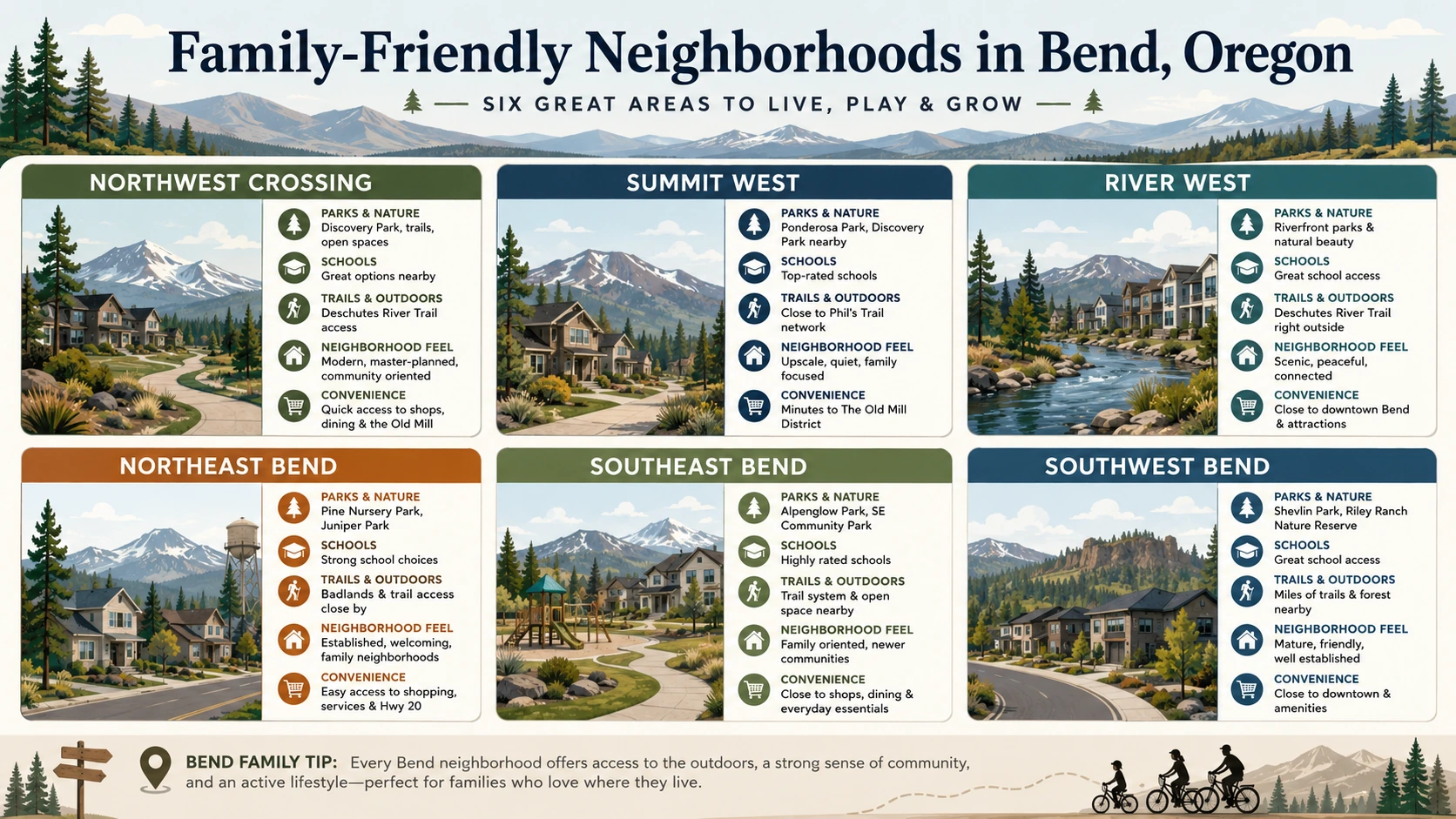
Choosing the Right Neighborhood
The right family neighborhood depends on more than online ratings. Families should compare school assignment, home price, commute, parks, sidewalks, traffic, lot size, nearby construction, and access to everyday services.
NorthWest Crossing
NorthWest Crossing offers planned streets, parks, trails, schools, shops, restaurants, and westside access. It may appeal to families wanting walkability and community design.
Potential tradeoffs include premium pricing, smaller lots in some areas, and competition for desirable homes.
Summit West
Summit West includes westside neighborhoods near trails, schools, parks, and routes toward Mt. Bachelor. Housing ranges from established homes to luxury properties.
Buyers should compare elevation, winter shade, road grades, and distance from daily shopping.
River West
River West provides access to downtown, parks, river trails, restaurants, and westside amenities. It may suit families who prefer an established neighborhood with urban convenience.
Older homes may require renovation, and lots or garages may be smaller than in newer subdivisions.
Southeast Bend
Southeast Bend can provide newer housing, family-oriented subdivisions, parks, and access to major roads.
Families should review current construction, school boundaries, commute patterns, and the distance to westside activities.
Northeast Bend
Northeast Bend offers a mix of established homes, newer developments, parks, shopping, and access to Highway 97.
Traffic and school drop-off patterns vary by location, so buyers should test daily routes.
Southwest Bend
Southwest Bend can provide relatively direct access toward Mt. Bachelor and the Cascade Lakes corridor. It may appeal to outdoor-oriented families and buyers seeking newer homes or larger properties.
Some locations are farther from central Bend services.
Finding the Right Schools
School selection should begin with the child’s needs, not a real estate listing’s marketing language.
Bend-La Pine Schools uses attendance areas, and district policy allows boundaries to be reviewed or adjusted. Families should verify an address directly with the district before buying or signing a lease.
Verify the Assigned School
Do not assume that the closest school serves a property. Ask the district to confirm:
- Elementary assignment
- Middle school assignment
- High school assignment
- Transportation
- Current enrollment procedures
- Transfer options
- Future boundary changes
Compare Programs
Families may want to evaluate:
- Academic approach
- Special education services
- Advanced coursework
- Arts
- Athletics
- Career and technical education
- Language programs
- Clubs
- Counseling
- Before- and after-school care
School Choice and Transfers
Families considering a school outside their attendance area should review current application deadlines and space requirements. Approval is not automatic.
Healthcare
Healthcare planning is especially important for families with ongoing prescriptions, specialists, therapies, disabilities, allergies, or chronic conditions.
Do not wait until after the move to begin calling providers.
Pediatric and Primary Care
Before relocating:
- Request medical records
- Identify pediatric providers
- Verify insurance networks
- Refill essential prescriptions
- Schedule overdue appointments
- Locate urgent care
- Identify the nearest emergency department
Specialists
Families needing specialists should compare availability in Bend with options in Redmond, Portland, or other regional centers.
A provider appearing in an online directory does not guarantee that the office accepts new patients or the family’s insurance.
Mental and Behavioral Healthcare
Parents should research counseling, behavioral health, developmental services, and school-based resources early. Wait times and insurance participation may vary.
Emergency Planning
Save addresses and routes for:
- Emergency department
- Urgent care
- Pediatrician
- Pharmacy
- Dentist
- Veterinary clinic
- Poison control
- School emergency contacts
Kids Activities
Bend offers youth activities throughout the year, but registration deadlines matter.
Bend Park and Recreation District provides youth sports, swimming, skating, hockey, soccer, basketball, tennis, pickleball, camps, arts, outdoor programs, and childcare-related activities.
Sports
Programs may include:
- Soccer
- Basketball
- Baseball
- Softball
- Lacrosse
- Flag football
- Tennis
- Pickleball
- Hockey
- Skating
- Swimming
- Volleyball
- Biking
Some leagues fill quickly or require registration months before the season begins.
Camps and School-Break Programs
Options may include day camps, outdoor programs, art, STEM, swimming, biking, paddleboarding, field trips, and no-school-day care.
The district’s programs can include trips to parks, lakes, swimming facilities, and outdoor recreation locations.
Arts and Enrichment
Families can also look for:
- Music
- Theater
- Pottery
- Art
- Dance
- Martial arts
- Cooking
- Technology
- Library programs
Childcare
Childcare should be researched before selecting a closing or move date. After-school programs and camps may use lotteries, waitlists, or fixed registration periods. Bend Park and Recreation District reported waitlists for its 2026–27 Kids Inc. after-school program.
Outdoor Lifestyle
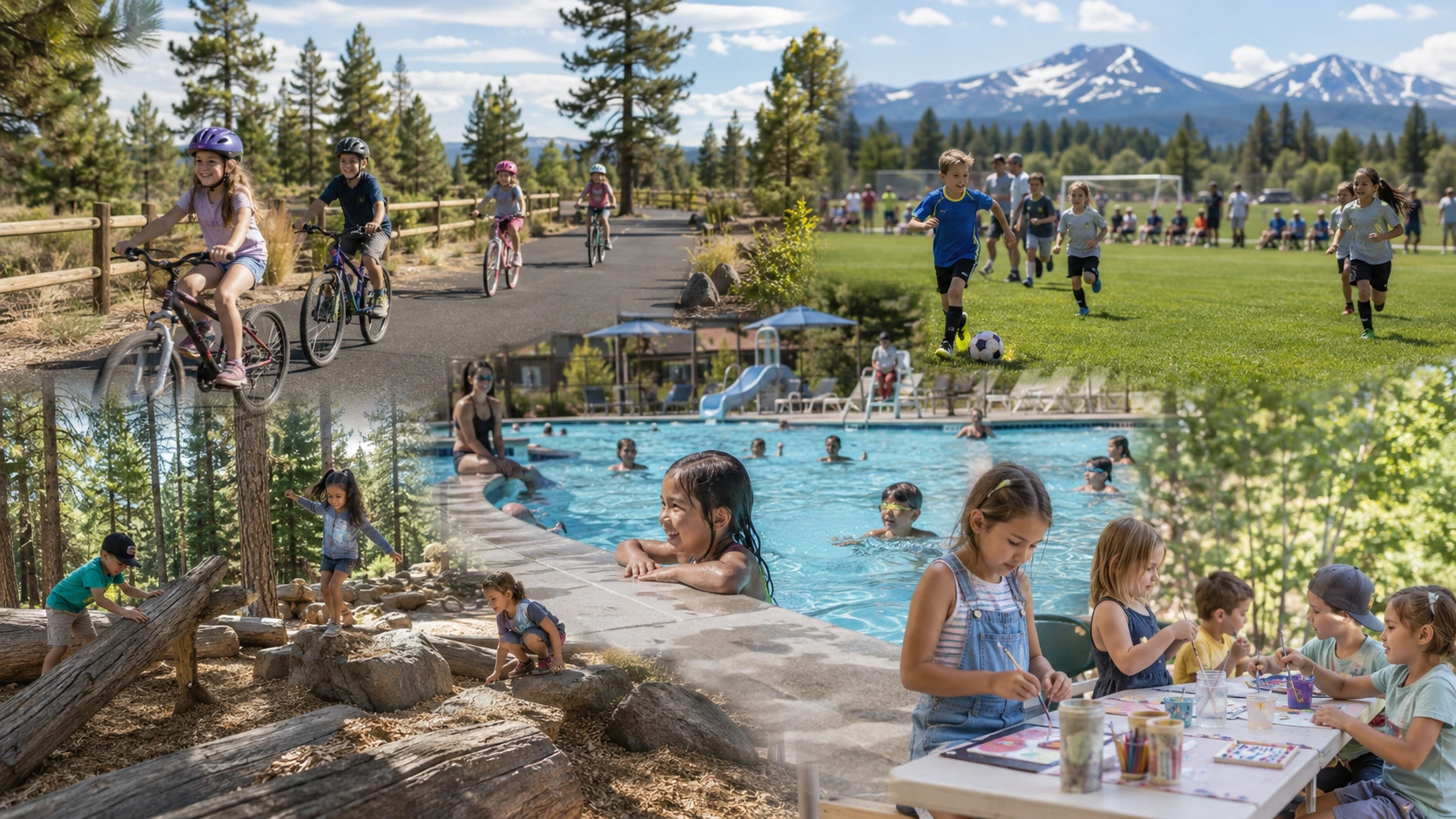
Outdoor living can be one of the biggest benefits of raising children in Bend, but families should build skills and routines gradually.
Easy Family Activities
Start with:
- Neighborhood walks
- Paved river trails
- Local parks
- Nature play areas
- Short hikes
- Recreation swimming
- Beginner bike routes
- Sledding in approved areas
Winter Recreation
Winter activities may include:
- Skiing
- Snowboarding
- Nordic skiing
- Snowshoeing
- Ice skating
- Sledding
Families new to snow should budget for winter clothing, tires, lessons, and equipment.
Summer Recreation
Summer may include:
- Swimming
- Paddleboarding
- Hiking
- Biking
- Camping
- Fishing
- Lake days
- Outdoor concerts
Smoke and heat can affect plans. Families may need indoor alternatives during poor air quality.
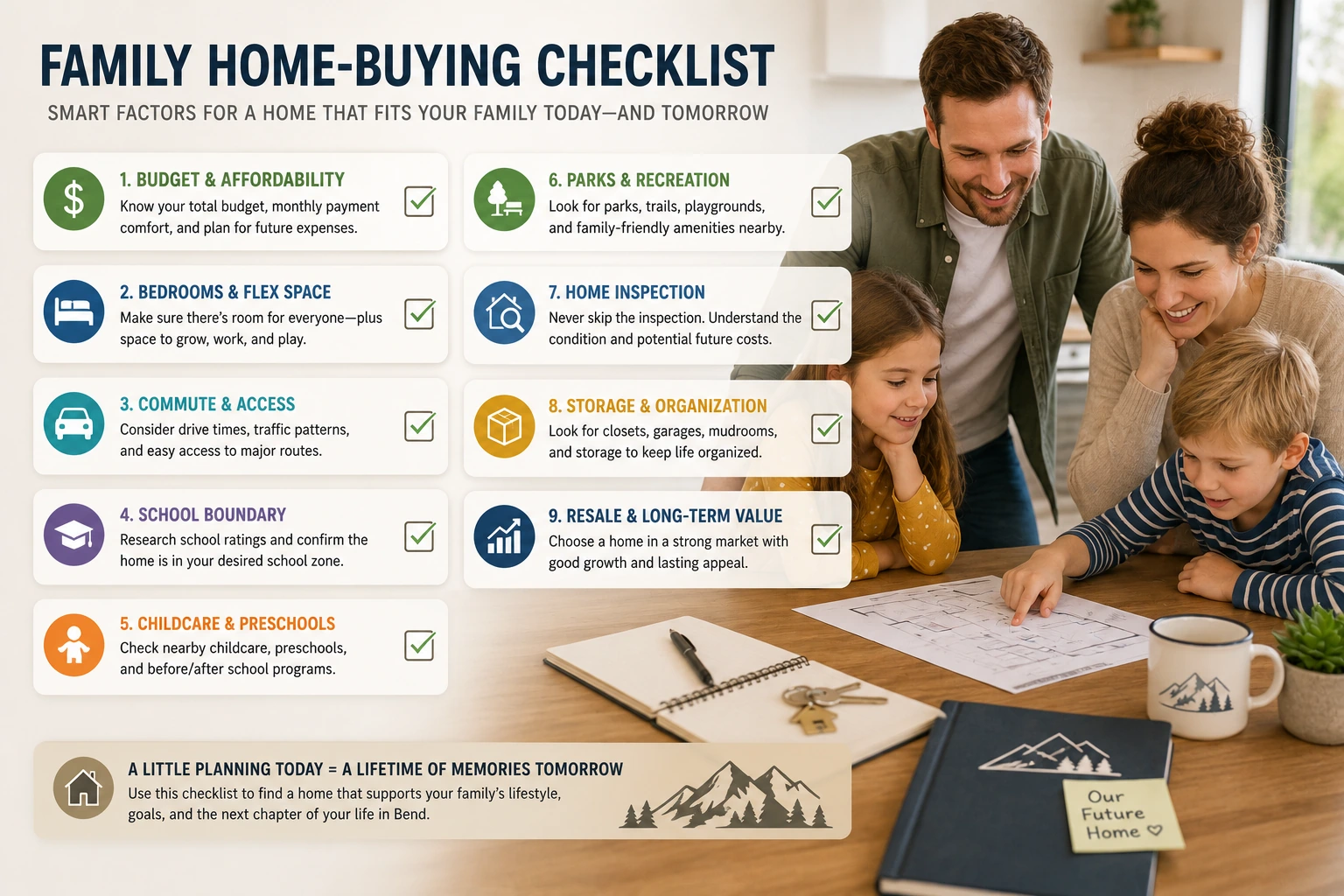
Buying Your Family Home
A family home should support weekday routines, not only look good during a showing.
Set a Full Housing Budget
Include:
- Mortgage
- Property taxes
- Insurance
- HOA dues
- Utilities
- Maintenance
- Childcare
- Commuting
- Winter preparation
- Landscaping
- Home repairs
Match the Home to Daily Life
Consider:
- Bedroom layout
- Home-office needs
- Storage
- Garage space
- Yard
- Stairs
- School commute
- Childcare commute
- Internet
- Nearby parks
- Safe walking routes
Inspect for Central Oregon Conditions
Pay attention to:
- Roof
- Heating
- Insulation
- Windows
- Crawlspace
- Irrigation
- Decks
- Drainage
- Radon testing
- Wildfire exposure
- Tree conditions
- Snow and ice patterns
Avoid Buying Only for a School
School boundaries, family needs, and programs can change. A home should still work if a child changes schools or a boundary is adjusted.
Moving Timeline
Three to Six Months Before Moving
- Confirm employment
- Set the housing budget
- Research neighborhoods
- Review schools
- Join childcare waitlists
- Contact healthcare providers
- Obtain mortgage preapproval
- Plan a Bend visit
One to Three Months Before Moving
- Secure housing
- Schedule inspections
- Confirm school enrollment documents
- Request medical and school records
- Reserve movers
- Arrange temporary housing when needed
- Plan utilities and internet
Two to Four Weeks Before Moving
- Confirm closing or lease dates
- Update addresses
- Transfer prescriptions
- Pack essential family items separately
- Arrange pet care
- Confirm childcare
- Plan the travel route
First Month in Bend
- Register with healthcare providers
- Confirm school routines
- Test commute times
- Obtain library cards
- Register for recreation programs
- Review emergency routes
- Meet neighbors
- Build indoor and outdoor activity plans
Mistakes Families Make
Choosing a Home Before Testing the Commute
Drive the school, work, childcare, and grocery routes during realistic times.
Trusting Listing-Site School Information
Verify attendance boundaries with the school district directly.
Waiting Too Long for Childcare
Programs may fill or use waitlists.
Underestimating Housing Costs
A mortgage payment does not include the entire cost of family life in Bend.
Treating a Vacation as a Relocation Test
Vacation routines do not reflect school traffic, work commutes, errands, winter mornings, or regular healthcare needs.
Ignoring Smoke and Winter Conditions
Bend’s outdoor lifestyle includes weather and air-quality disruptions. Families need backup plans.
Buying Too Far From Daily Needs
A beautiful view may lose its appeal when every school, work, sports, and medical trip becomes difficult.
Frequently Asked Questions
Bend can be a strong fit for families who value recreation, parks, outdoor access, youth programs, and a smaller-city environment.
Northwest Crossing, Summit West, River West, northeast Bend, southeast Bend, and southwest Bend may all work. The best choice depends on budget, schools, commute, and lifestyle.
Yes. Bend Park and Recreation District offers more than 1,000 annual programs across age groups, including sports, swimming, camps, arts, outdoor activities, and childcare.
Verify the property address through Bend-La Pine Schools before buying or leasing. Boundaries may change, and the closest campus may not be the assigned school.
Availability varies. Families should research early because after-school care, preschool, and camps may use waitlists or registration windows.
Include childcare, healthcare, transportation, winter equipment, utilities, recreation, insurance, home maintenance, and school-related costs.
Renting can help families understand commutes, neighborhoods, schools, and seasonal conditions before making a long-term purchase. However, rental availability and moving twice must also be considered.
Many families prefer summer because it reduces school disruption. A midyear move can still work when housing and employment timing require it. School registration and childcare should be arranged early.