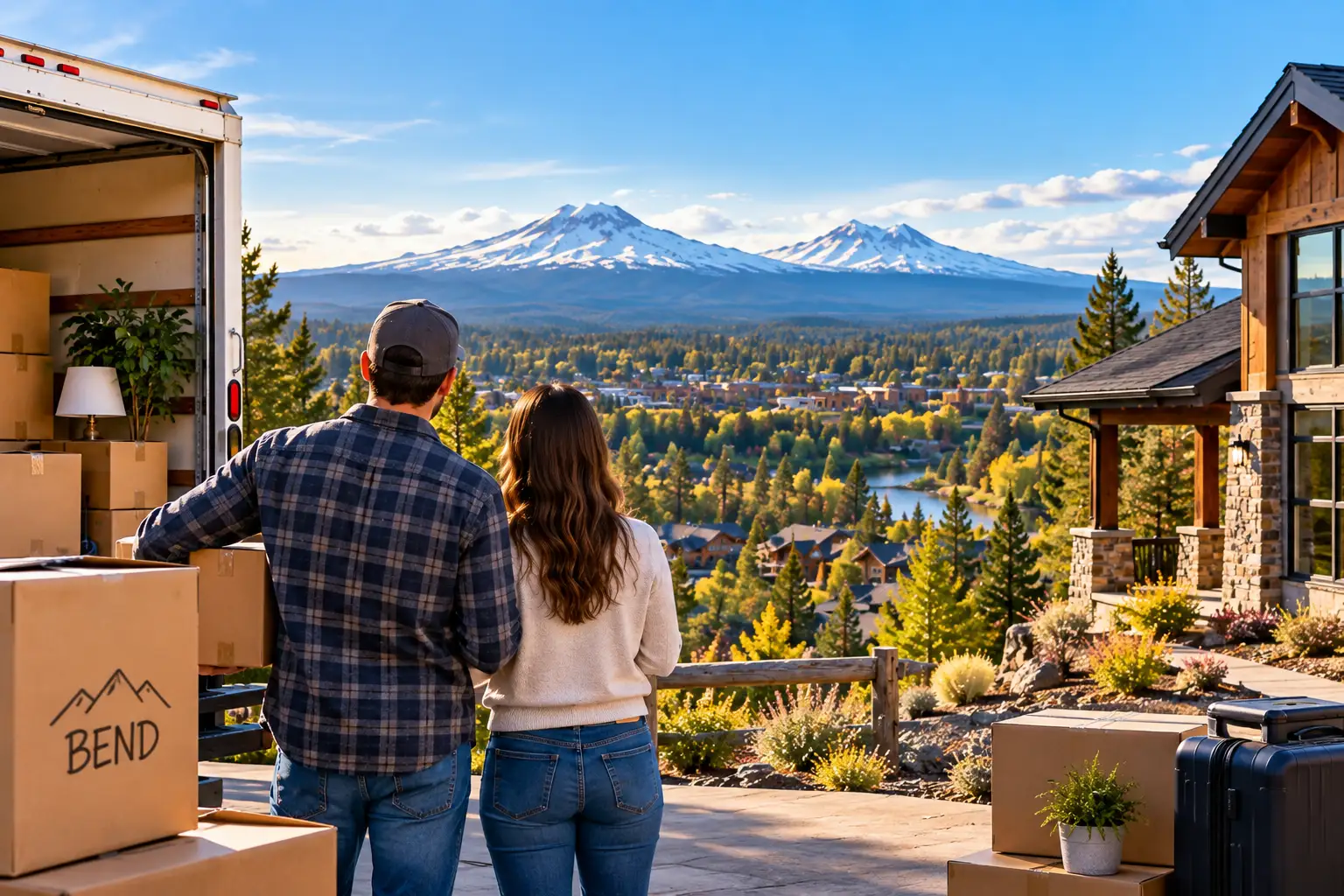
Bend is a self-publishing company. It’s a postcard down-town scene, quiet trails through ponderosa pines, and sunny skies over the Cascades. If you’re looking to downplay the hustle and bustle and get more time outside, then Bend is clearly the next logical choice.
But an out of state move to Bend, Oregon comes with a learning curve. The Bend that the Bend people see when the moving truck leaves is not necessarily the same as the one they see while on vacation. Fortunately, most of the errors that relocating buyers tend to make are foreseeable and can be avoided. This guide explains the most frequently encountered ones to help you move to Bend, Oregon in a better way.
Mistake One: Assuming You Can Find a Job After You Arrive
The number one reason more relocations get derailed is this. When people visit Bend, they get smitten and don’t have to look into employment until some time later, only to find there isn’t much work to be had, and it’s more competitive than they thought.

The Local Job Market Is Limited
Bend is a strong economy for a town its size with healthcare, tourism, outdoor recreation, education, and a growing remote worker base. However, it is not a big metropolitan labor market. There may be fewer openings than in Portland, Seattle, or Denver in certain industries, like tech, finance, and specialized corporate sectors. The wages are also lower for the same job as compared to a larger city.
Remote work is a common bridge
A lot of people who make the move to Bend find employment elsewhere, but end up working remotely. Any work that can be performed at any location is a definite asset. So if that’s not going to work out, the best step is to get a job before moving. Start looking for a job well in advance, contact local companies, and be prepared for a longer search.
The Cost of Living Demands a Plan
Bend is not a cheap place to live in. The cost of living is about 12 percent higher than the national average, and the largest contributor is housing. It’s a recipe for stress when you come to a place without a steady income and a realistic budget. Learn your numbers prior to committing.
Mistake Two: Underestimating the Housing Market
Bend real estate is costly, competitive, and different than a lot of markets that buyers are acquainted with. Movers sometimes bring with them expectations that are not fulfilled.
Prices Are Higher Than Many Expect
The median home value in Bend is above the national median, and desirable neighborhoods are worth more. Some people are surprised when they purchase from a lower-cost area, as they may be misled about what their price range will get. While a $300,000 price tag might purchase a spacious new home in another area, it will only get an older home of comparable size in Bend.
Inventory Is Better but Still Tight
Market is no longer as abnormal as during the pandemic, with days on market and listings up. That is a positive development for the purchasers. Well-priced homes in desirable destinations continue to sell rapidly, however, and you might have to make a quick decision when the home of your dreams comes along.
Rent First If You Can
First on our list of relocation tips for Bend, Oregon is to rent before purchasing. Renting will give you the chance to find out about the neighborhoods, understand the traffic conditions, experience seasons, etc., and will help you make an informed buying decision based on the local information rather than on impressions from the vacation. It will also give you a local address and save you time.
Mistake Three: Choosing a Neighborhood Based on a Weekend Visit
It’s a cute town, downtown Bend. It is not suitable for everyone. Sometimes the buyers move to another neighborhood after taking a single weekend trip and find themselves in a place that isn’t a place that they can live.
Consider How You Actually Live
Think about how you spend your time. Do you like being in a crowded place and listening to the noise around, or do you prefer quietness? Make sure you’re close to schools or hospitals or trails. Can you travel a longer distance to the grocery store? Bend neighborhoods are not the same, so your ideal location depends on your daily routine and not just your tourist schedule.
Research Traffic and Commute Patterns
However, Bend has traffic, albeit not a lot, and some areas of the city are congested during rush hour. When driving to work, know what it is like to drive on a Tuesday morning, not Saturday afternoon. A close house on a map can be a long way in the car during rush hour.
Think About the Seasons
It’s a beautiful summer in Bend. It’s cold, snowy, and much longer than many realize. The snow and ice handling and level of exposure to the sun vary in some neighborhoods, as against others. Where you live will depend on how you want to deal with high desert winters if that is something you’re not familiar with.
Mistake Four: Ignoring the Cost of Utilities and Daily Life
Housing costs are the largest expenses, but they’re not the only expenses. Moving buyers sometimes do not realize the continuing expenses in Central Oregon.
Utility Bills Can Surprise You
The summers of Bend have hot weather while the winters are cold. It’s an issue of paying for heating and cooling. You may think of irrigation involved in landscaping if you live in a dry location, and you’ll have to pay for it too.
Groceries and Gas Run Higher
Bend’s grocery prices are higher than national averages, and gas prices have been among the highest in Oregon, as well. Other eating, entertainment, and recreation costs also accumulate. The Bend lifestyle is fantastic; however, it’s certainly not low cost.
Wildfire Insurance Is a Real Factor
Bend is in a wildfire-prone area, and this is reflected in insurance rates. The average homeowners insurance premium is also higher than the state average, and may differ widely based on risk factors and location within the state. A surprising side of the property buying process is that some buyers are not aware that some properties are difficult or more costly to insure.
Mistake Five: Assuming You Can Live Without a Car
Bend is an overall car-dependent city. While some areas are more pedestrian and cycling-friendly than others, most people still require a car to get around.
Walkable Areas Exist but Are Limited
The areas that are the best places to walk and bike are Old Bend, River West, and Southern Crossing. However, if you’re looking for a home that’s light on energy, narrow the search to those neighborhoods. Even there, however, having a car for regional shopping, mountain recreation, airport trips, and places outside Central Oregon is helpful.
Transit Is Limited
Bend operates public transportation, which isn’t particularly robust compared to having a car. If you come from an area with a well-established public transit system, temper your expectations.
Budget for Two Cars If Needed
Two cars are required in many Bend households, particularly when both adults are working and/or when children are participating in activities. Consider this in your home search and cost comparisons of the neighborhood and home itself.
Mistake Six: Not Visiting in Different Seasons
A summer trip can make Bend seem like a paradise. Rather, a winter visit tells a different story. If you’re looking into moving, make a second visit, preferably in various seasons.
Winter Reveals a Different Bend
Here it is a given that there will be snow and ice and shorter days and colder temperatures. Some people really enjoy it. Others know that it’s not for them. It’s better to find out before you move in than after.
Spring and Fall Show Transition
Spring is a wet and wild season. Fall can be a wonderful but short time of the year. You might come and visit Bend a few times a year to experience life there in different seasons.
Mistake Seven: Skipping the Research on Schools and Healthcare
Make sure you consider families, schools, and hospitals in the new area first.
Schools Vary by Neighborhood
Bend has highly rated public schools, and attendance areas are important. Investigate the schools in the neighborhoods you are interested in and, if you can, visit the schools. There are private school choices available but come at an extra expense.
Healthcare Access Requires Planning
Bend has a robust health care system, led by St. Charles Health System. Some residents may need to go to Portland for some specialized care, and there may be limited availability of specialists. If you have medical needs that you still need to attend to, find out about providers before you relocate.
Mistake 8: Waiting too long to get local help
Relocating out of the city prevents you from viewing the houses and talking directly to all contacts. One of the biggest mistakes people make is trying to control everything remotely without a single representative to help.
Work With a Local Agent Early
A knowledgeable local real estate agent may get you the insider information on neighborhoods, selling prices, and the market. An agent is able to visit your property for an assessment or a video tour. They will be able to spot problems that you would not notice by looking at the images. It is better to connect with them earlier because you will probably have to wait a few months to buy a property.
Connect With Lenders Who Know Bend
Some lenders don’t know the Bend market. Work with someone who is knowledgeable about all the ins and outs, including the insurance and financing, and you will save some reasonable time.
Mistake Nine: Expecting Everything to Be Like It Was Where You Came From
This is not a logistical error; it’s a mindset error. Bend is not the same; it’s in a different time, a different place, different politics, different weather, and different culture. Individuals who relocate here attempt to duplicate their previous life and then have trouble.
Embrace the Local Rhythm
Bend is somewhat unique, and this makes it special. The communities and relaxed lifestyle add up to the overall small-town atmosphere and abundance of outdoor options. Concentrate on what you possess rather than what you lack.
Be Patient With Yourself
Relocation may create its difficulties, even in the best scenario possible. This is why it is important to ensure a smooth process and make sure you feel comfortable in your new place. You will have to develop a schedule, improve your social life, and ensure you get used to your new home.
Final Thoughts on Relocating to Bend, Oregon
While moving to Bend is a great opportunity, it’s not something that should be done on a whim. The errors listed below are not uncommon, but can be avoided by planning, research, and realistic expectations.
Those who don’t do their homework often do not do well after an out of state move to Bend, Oregon. Before they arrived, they had earned income. They lived on rent first and then purchased. They came in several winters. They knew the price. They selected a locality that did not offer a holiday atmosphere but one that mirrored everyday life.
By taking the time to plan, Bend can be all you hoped that it would be. Without adequate planning, the process of moving could be more challenging than one estimates. So now it is time for you to get started.
Frequently Asked Questions
Aim for your income to be planned ahead of time. Know about high rents and car-dependent design. Research neighbourhoods according to what you really live in. Come in winter and summer. Make sure you have enough resources to cover different expenses associated with moving. One of the key rules of a successful move is to plan and prepare.
The local job market isn’t as large as in big cities, and wages are lower. Usually, people who have to move relocate to remote jobs. If you want to find a job close to your house, you should start your search months ahead.
Renting in the beginning might be a good idea. A person can get used to a new location and assess which place to buy or rent. It also offers a local address and time to save for a down payment.
The overall cost of living is roughly 12% higher than the national average, with housing costs the main contributor. Other costs, such as utilities, groceries, gas, and insurance, are also elevated compared to other parts of the country. Plan for your move.
The majority of the residents require a car. A few areas, such as Old Bend and River West, are more walkable, but a vehicle is still necessary for regional trips, recreation, and outside of Central Oregon. Transit is limited.
Once you get there, you can obtain a position. Underestimating housing costs. Selecting a neighbourhood from an overnight look. Failing to consider utility and insurance expenses. Assuming that Bend is the same place where you are from. All these can be prevented by research and planning.