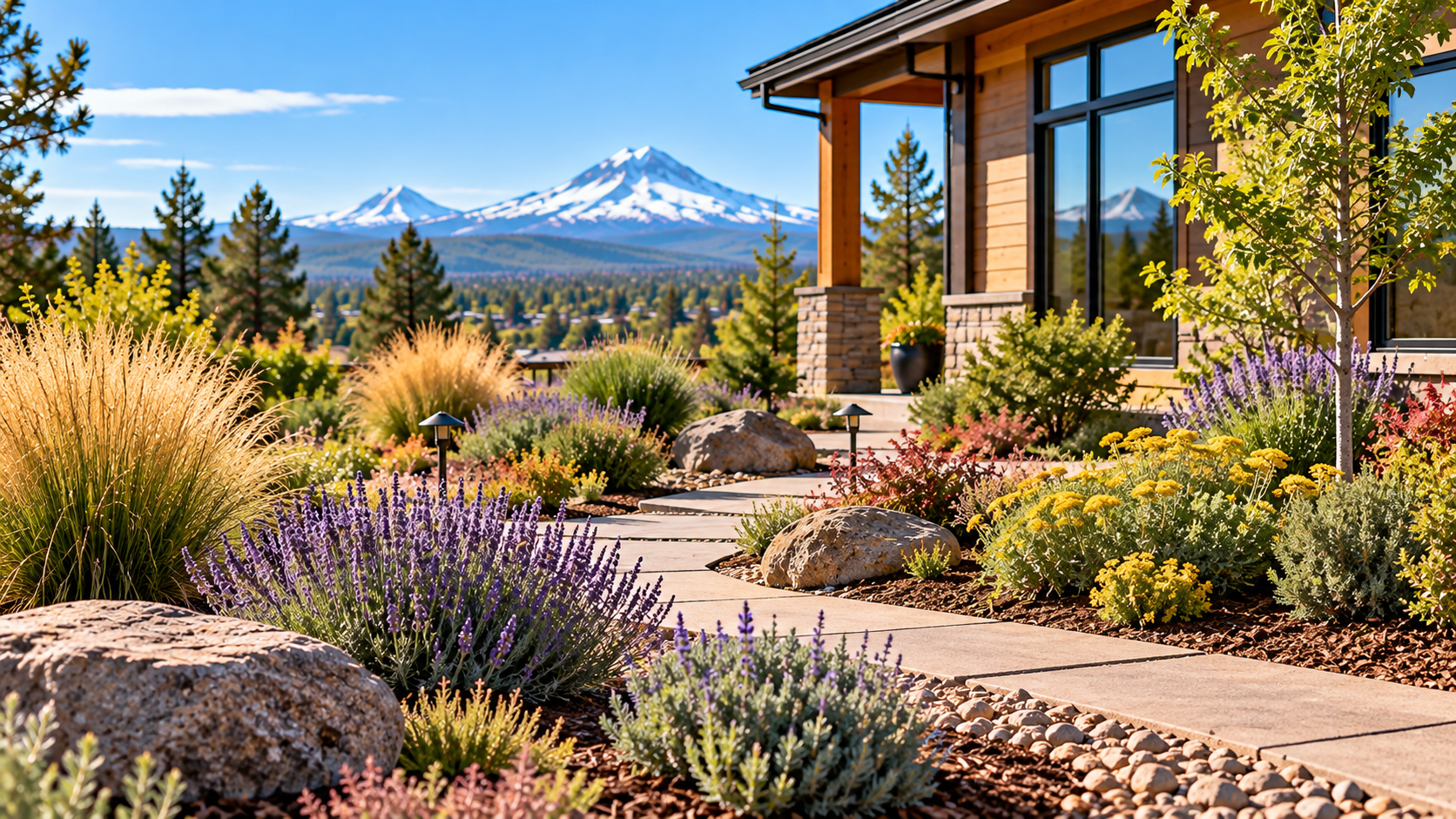


If you’ve ever watched a green lawn turn brown by mid-July, you already know the high desert plays by its own rules. Bend gets lots of sun, almost no summer rain, and soil that drains faster than you’d expect. The yard that looks amazing in May can turn into a painful water bill by August.
So let’s talk about water-wise landscaping in Bend, Oregon that you can actually use. We’ll cover planning your yard, picking plants, and setting up irrigation that doesn’t waste water. Whether you’re buying a home, already own one, or you’re just tired of babysitting a thirsty lawn, this one’s for you.
And no, xeriscaping in Bend, Oregon doesn’t mean gravel and cactus. A good plan mixes plants, mulch, and smart watering into a yard that’s green, colorful, and easy to live with. Here’s how to get started, what the city can help with, and which mistakes you can skip.
Why Water Matters in Bend Yards
Here’s something most new homeowners don’t see coming: your yard will probably drink more water than your household does. Most Bend homes use more water outside than inside, and the gap is biggest in summer.
The High Desert Reality
Our soil is coarse and doesn’t hold water the way soil does in wetter places. Add hot, dry summers and cool nights, and plants dry out fast. Local estimates put about 60 percent of residential water in Bend toward landscape irrigation, and summer demand climbs to roughly five times winter levels. If you want the full story on why our seasons swing so hard, our guide to Bend, Oregon climate and weather covers it.
What It Costs You
Grass is thirsty. The City of Bend says homes with high water-use lawns can use two to three times as much water per square foot as homes with low-water plantings. You’ll feel that on your bill every summer. If you’re working out a household budget, our breakdown of the cost of living in Bend, Oregon shows where utilities fit in.

Water-Wise Landscaping in Bend, Oregon Starts With a Plan
The nicest yards in Bend aren’t built one impulse plant at a time. They start with a plan that thinks about your site, your soil, and how many weekends you want to spend out there. Oregon State University Extension and the City of Bend put together a seven-step guide to water-wise gardening in Central Oregon, and honestly, it’s a great place to start.
Get to Know Your Yard First
Before you buy a single plant, spend a week just watching your yard. Where does the sun hit all day? Where does the water pool after the sprinklers run? Which corner gets hit hardest by the wind?
Sun, Slope, and Soil
South- and west-facing spots run hot and dry. Shady corners stay cooler. Slopes shed water, while flat spots hold it longer. Once you match your plants to those conditions, everything else gets easier.
Group Plants by Water Need
Put plants that like the same amount of water together. People call this hydrozoning, and it lets you water each area exactly as much as it needs. Thirstier plants go near the house, tougher ones farther out. It sounds almost too simple, but it saves a lot of water and a lot of time.
Build Healthy Soil and Mulch
Good soil and mulch make everything else in your yard work better.
Why Mulch Matters
Mulch slows evaporation, holds soil in place, and keeps roots cooler. It’s usually the cheapest thing you can add, and you’ll notice the difference.
Rock Isn’t the Answer
A lot of people hear “xeriscape” and picture a sea of gravel. But Bend’s water conservation staff point out that big rock areas soak up heat and throw it back, so nearby plants can end up needing more water. A mix of plants and mulch usually looks better and works better.
Xeriscaping in Bend, Oregon: Lawn Alternatives and Rebates
Today’s xeriscapes don’t look like a desert. They look like a garden that was built for this climate. There are plenty of low-water plants that bring color, texture, and shade. Good design does the work here, not a truckload of rock.
Not a Rockscape
OSU Extension describes water-wise gardens as attractive, colorful, and varied. It also says you don’t have to stick to native plants. The point is to choose plants that fit your site and your water budget.
The City’s Turf Replacement Rebate
Here’s some good news. The City of Bend offers a Turf Replacement Rebate to water customers who swap high-water lawns for low-water landscapes. The rebate has been $3 per square foot of removed turf, up to $3,000. Applications open each spring, and there are a few rules to know before you grab a shovel:
- You must be a City of Bend water customer and get approval before you start.
- The project has to convert an entire irrigation zone.
- The new landscape can’t include live lawn or invasive plants.
- You need to keep it in compliance for five years.
If you’re thinking about xeriscaping in Bend, Oregon, check current funding, deadlines, and requirements with the city’s conservation team before you spend any money.
If You Want to Keep Some Lawn
Not everyone wants to give up grass, and that’s completely fine. Just know that lawns in Central Oregon need about an inch and a half of water a week in peak season. Keep yours smaller, put it where you’ll actually use it, and stay on top of the irrigation.
Native Plants in Bend, Oregon You Can Count On
Native plants in Bend, Oregon already know how to handle our soil and climate. They’re great for pollinators and wildlife, too. They’re not zero-maintenance, but once they settle in, most of them get by on a lot less water.
Local Natives That Work
OSU Extension lists several native shrubs you can find at local nurseries that do well in town, including bitterbrush, desert sweet, gray rabbitbrush, low green rabbitbrush, and big sagebrush. These are tough plants that love sun and dry soil.
Water-Wise Favorites Beyond Natives
You don’t have to go all-native. OSU Extension’s Central Oregon horticulturist has recommended penstemon, English lavender, sedum, crabapple, and serviceberry for water-wise gardens. You get flowers, fall color, and habitat without a big water bill.
Helping New Plants Get Established
Even a tough native plant needs regular water while its roots grow. Put it in the right spot and plan to water it through the first few seasons. Native plants in Bend, Oregon need less and less water as their roots go deeper, but they do need that help early on.
Irrigation in Bend, Oregon: What Homeowners Should Know
Even the smartest yard needs some water. Irrigation in Bend, Oregon comes with rules about when and how you can water, and getting it right saves you money and keeps you out of trouble.
City Watering Rules
During the irrigation season, the City of Bend uses even and odd day watering and nighttime watering rules, and it asks residents not to water in the heat of the day. Check the city’s irrigation hours page for the current schedule. Some homes get water from private wells or irrigation districts, where the rules can be different, so confirm which one applies to your address.
Efficient Systems
Drip irrigation is the most efficient way to water. The city also recommends low-precipitation nozzles, pressure-regulating sprinklers, and smart controllers. A smart controller adjusts to the weather, so it won’t water when your plants don’t need it. Turn on the seasonal adjust feature so your run times change with the seasons.
Free Help From the City
This part is easy to miss. The City of Bend offers free sprinkler inspections and free rain gauges for water customers, plus outdoor rebates on things like drip systems, nozzles, and controllers. And before you dig anything, call 811 so you don’t hit an underground line.
End of Season
Irrigation season winds down in the fall, and your system needs to be ready before the first hard freeze. Ask your installer how to shut it down properly so pipes and valves don’t crack over winter.
Planning Your Yard: HOAs, Budget, and Timing
A yard project is about more than plants and sprinklers. Rules, cost, and timing matter too.
Check Your HOA Rules
Many Bend neighborhoods have HOAs with landscaping rules, and some want to approve a lawn removal first. The good news is that several Bend-area HOAs have adopted OSU’s water-wise guide, so you may have more freedom than you think. If you’re still picking where to live, our guide to Bend, Oregon neighborhoods can help you compare areas.
Budget and Phasing
You don’t have to do it all at once. Converting one irrigation zone at a time spreads the cost over a few seasons. If you’re going after the city rebate, remember each project has to cover a whole zone.
Hiring Help
A good landscape or irrigation pro can save you a lot of time and do-overs. Ask for references and check their license before you sign anything. Make sure the plan covers both the plants and the irrigation changes, not just one of them.
Curb Appeal and Resale
A well-planned yard helps your home stand out. Buyers notice tidy, healthy landscaping, and plenty of them would rather not spend every weekend mowing. It’s one of the small details behind why some Bend Oregon homes get more offers than others.
Think about how you’ll actually use the space, too. A patio, a fire pit, or a small patch of lawn for the kids can turn your yard into an extra room. If you love being outside, our guide to outdoor recreation in Bend, Oregon can help you plan around the way you live.
Common Landscaping Mistakes in Bend
Most yard headaches come from the same few mistakes.
Overwatering
More water doesn’t mean happier plants. Overwatering wastes money and can actually hurt the roots. Adjust your schedule as the season changes.
Mixing Water Needs
Put thirsty plants and drought-tolerant plants on the same zone, and something loses. Either plants die or water gets wasted. Group them by water need.
Skipping the Irrigation Changes
Swapping a lawn for shrubs and perennials but leaving the old spray heads in place is a classic one. Switch to drip when you change the plants.
Wrapping Up
Water-wise landscaping in Bend, Oregon pays you back with lower bills, less upkeep, and a yard that actually fits the climate. Start with a plan, choose plants that suit your site, and set up your irrigation to follow the city’s rules.
And remember, you don’t have to finish it all in one summer. Take it one zone at a time, use the city’s programs, and build a yard that looks good in July and still looks good in January.
Frequently Asked Questions
It’s a way of designing your yard with plants, mulch, and efficient irrigation that suit the high desert. The goal is a yard that looks great on less water, using ideas like grouping plants by how much water they need.
Yes. The City of Bend has offered a Turf Replacement Rebate of $3 per square foot, up to $3,000, for qualifying projects. Check the current rules and funding with the city before you start.
For most homes, yes, as long as the design fits your site. A good xeriscape uses plants and mulch, not just rock, and it still has to follow your HOA’s rules.
Bitterbrush, rabbitbrush, big sagebrush, and desert sweet are popular native shrubs. They handle dry soil well and support pollinators and wildlife.
It depends on your plants, soil, and the time of year. Lawns need about an inch and a half a week at peak season, while low-water plants need much less. Follow the city’s even and odd day rules and adjust as the season changes.
Yes. The City of Bend sets watering hours and even and odd day rules. If your property uses a well or an irrigation district, the rules may be different.