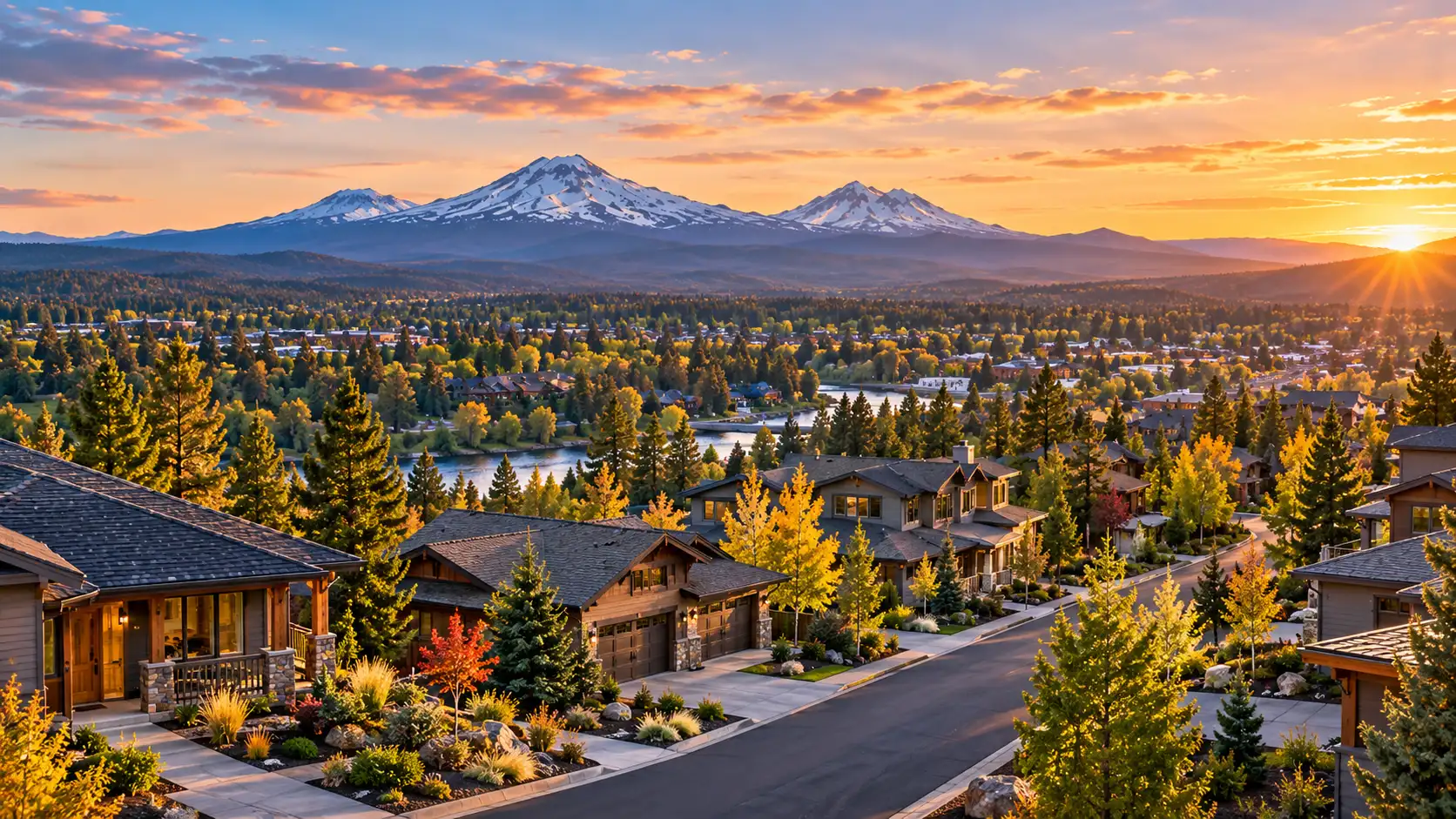
Choosing where to live in Bend Oregon is about much more than finding a house you like. Two properties with similar prices and square footage can offer completely different day-to-day experiences depending on where they are located. One may put you close to restaurants, trails, parks, and downtown, while another may offer a larger yard, newer construction, more garage space, or a quieter residential setting.
That difference is especially important for buyers relocating to Central Oregon. A neighborhood that looks appealing during a short visit may not necessarily fit the way you actually live throughout the year. Commute time, winter conditions, school access, recreation, shopping, walkability, home style, and even how often you want to drive can all affect whether a neighborhood feels right after you move in.
There is no single answer to where to live in Bend Oregon. The right fit depends on your priorities, budget, household needs, and the lifestyle you want to build. Understanding those trade-offs before you start touring homes can make the search more focused and help you avoid choosing a property simply because the house itself looks attractive.

What Should You Consider When Choosing a Bend Oregon Neighborhood?
Before comparing individual neighborhoods, start with the way you actually spend your time. A neighborhood should support your everyday routine rather than simply match the image you have of Bend.
For some buyers, being able to walk to coffee, restaurants, parks, and local businesses is a major priority. Others would rather have a larger home, more storage, a private yard, newer construction, or easier access to major roads. Outdoor enthusiasts may care most about trails and mountain access, while families may put schools, childcare, parks, and commute times higher on their list.
When choosing a neighborhood in Bend Oregon, consider these factors together:
- Home price and monthly housing budget
- Property type and desired square footage
- Walkability and bike access
- Commute and road connections
- Schools and family needs
- Restaurants, shopping, and daily services
- Parks, trails, rivers, and outdoor recreation
- Lot size and privacy
- New construction versus established homes
- HOA fees and neighborhood restrictions
- Access to healthcare
- Winter driving and snow conditions
- Long-term plans for the property
The goal is not to find a neighborhood that has every possible advantage. Instead, it is to identify the combination of characteristics that matters most to your household.
Westside vs. Eastside Bend: A Major Lifestyle Decision
One of the easiest ways to begin understanding Bend is to compare the city’s broad Westside and Eastside areas. These are not formal lifestyle categories, and each side contains multiple neighborhoods with their own characteristics, but the distinction can help buyers understand the basic trade-offs.
The Westside is often associated with older neighborhoods, downtown access, restaurants, breweries, trails, parks, mature trees, and a more established Bend atmosphere. It can appeal to buyers who want to spend more of their free time walking or biking and who value proximity to local amenities.
Eastside and Southeast Bend generally provide newer construction and, depending on the property, opportunities for more space or different price points. These areas can work well for buyers who prioritize the home itself, garage space, newer systems, or practical access to everyday destinations.
Neither side automatically fits every buyer. The better starting point is to decide how important walkability, home size, location, and budget are to you.
When the Westside May Make Sense
Westside neighborhoods can be appealing if your ideal day includes walking to a coffee shop, riding a bike to a trail, meeting friends for dinner, or spending time near the Deschutes River.
Areas such as Old Bend, River West, NorthWest Crossing, and Discovery West offer different versions of that lifestyle. They are not interchangeable, but they share a stronger connection to the amenities and outdoor spaces that many buyers associate with central and west Bend.
The trade-off is that buyers may encounter higher prices, older homes, smaller lots, or more competition for certain types of properties.
When Eastside or Southeast Bend May Make Sense
Eastside and Southeast Bend can be worth exploring when your priorities lean toward newer homes, additional space, practical layouts, garages, or a different relationship between home size and budget.
Some buyers are willing to drive more often if it means getting the house features they want. For a family that needs multiple bedrooms, a larger yard, storage, and a two-car garage, that trade-off may be more important than walking to a restaurant.
The key is to decide whether you want to spend more of your housing budget on location and convenience or on the property itself.
How Walkability Should Influence Your Neighborhood Search
Walkability means different things to different buyers. For one person, it means being able to walk to dinner and coffee. For another, it means having sidewalks, parks, and trails close enough for a daily walk.
Bend is not uniformly walkable, so buyers should evaluate the specific neighborhood and even the specific property rather than assuming the entire area offers the same experience.
For buyers who place a high value on pedestrian access, our walkable neighborhoods in Bend Oregon guide provides a useful starting point for comparing areas where daily activities can be more accessible without driving.
Downtown Walkability
Old Bend and nearby areas can appeal to buyers who want closer access to downtown, restaurants, parks, and river paths. The experience can be particularly different from neighborhoods where most errands require a vehicle.
However, walkability can come with trade-offs. Older homes, smaller lots, limited parking, and higher purchase prices may be part of the package.
Neighborhood-Level Walkability
NorthWest Crossing provides another example of walkability that is different from downtown living. Its planned layout connects homes with parks, businesses, community spaces, and other neighborhood amenities.
This can be attractive to families and remote workers who want some daily convenience without living directly in the downtown core.
Choosing a Neighborhood Based on Your Daily Routine
One of the most useful questions to ask is simple:
What do you want a normal Tuesday to look like?
Imagine getting up, going to work or starting your remote workday, taking children to school, buying groceries, exercising, meeting friends, and returning home. Then think about how much driving you want to do during that routine.
A neighborhood can look excellent during a weekend showing but feel very different when you are making the same commute five days a week.
Think About Your Commute
A property that looks close to work on a map may not feel equally convenient during busy periods. If your household has two jobs in different parts of Bend, commute patterns can become even more important.
Instead of evaluating commute distance only in miles, consider the actual route and how it feels at the times you will normally travel.
If you work remotely, commuting may matter less, but access to coffee shops, parks, trails, schools, and everyday services may become more important.
Think About Daily Errands
Consider where you buy groceries, pick up prescriptions, visit healthcare providers, exercise, and handle routine errands.
A home that saves several short drives each week can provide a different lifestyle than a property where nearly every errand requires getting into the car.
This is also where neighborhood convenience becomes different from simple walkability. You may not need to walk everywhere, but having frequently used services within a short drive can still make everyday life easier.
Best Bend Neighborhoods for Different Lifestyles
When people search for the best neighborhoods in Bend, they are usually trying to answer a more specific question: which neighborhood is best for their situation?
Instead of treating every buyer the same, it helps to look at common lifestyle priorities.
For Families
Families often need to balance school considerations, home size, parks, commute, childcare, storage, and budget.
NorthWest Crossing can appeal to families who want a planned community with parks, businesses, trails, and a strong neighborhood environment. Southeast and Eastside areas can also be worth exploring for buyers who prioritize larger homes, newer construction, or different price points.
School boundaries should always be verified for the exact property rather than assumed from the neighborhood name.
For Remote Workers
Remote workers often have more flexibility about commute and may instead prioritize the experience of living close to amenities.
River West, Old Bend, NorthWest Crossing, and other Westside areas can appeal to people who want coffee shops, restaurants, trails, and community spaces nearby.
A home office should also be evaluated carefully. A property may be in an excellent location but have limited space for a quiet dedicated workspace.
For Outdoor Enthusiasts
Bend attracts buyers who want outdoor recreation to become part of everyday life. If hiking, biking, skiing, golf, or trail access is a major priority, the neighborhood search should account for how easily you can reach the activities you use most.
Our best hikes near Bend Oregon guide can help buyers understand the variety of recreation available around the city.
Outdoor access can also affect traffic and seasonal convenience. A neighborhood that looks close to a recreation destination may experience different travel patterns during busy weekends or peak seasons.
For Retirees
Retirees may have different priorities from families or working professionals. Single-level living, healthcare access, walkability, restaurants, recreation, home maintenance, and proximity to friends can become more important.
Some retirees prefer an active neighborhood close to downtown amenities, while others want privacy, views, golf, or a quieter residential setting.
The important thing is to evaluate how the property will support your routine now and several years from now.
For Luxury Buyers
Luxury buyers in Bend can consider a range of locations, including elevated view neighborhoods, golf communities, and premium Westside properties.
The priorities may include privacy, views, custom construction, lot size, outdoor living spaces, golf access, and proximity to recreation.
Golf-oriented buyers can also explore Bend’s golf communities separately because the lifestyle, amenities, membership considerations, and property types can differ considerably from conventional residential neighborhoods.
How Housing Type Affects Your Neighborhood Choice
The type of home you want can narrow your neighborhood search quickly.
If you want a historic home with mature trees and close-in access, areas such as Old Bend may be more relevant. If you want newer construction and a modern floor plan, newer communities in Eastside, Southeast, or Westside developments may deserve more attention.
Older Homes and Character Properties
Established neighborhoods can provide mature landscaping, distinctive architecture, and a stronger connection to Bend’s history.
However, older homes may require additional evaluation. Buyers should consider the age of major systems, insulation, plumbing, electrical work, roofing, sewer lines, and previous renovations.
The character of an older home can be a major advantage, but buyers should understand the maintenance implications before making an offer.
New Construction
Newer homes can provide modern layouts, newer systems, energy-efficient features, and less immediate maintenance.
The trade-off may be location, lot size, HOA requirements, or the amount of established landscaping and mature trees.
Buyers should compare the complete package rather than assuming new construction automatically provides better value.
Townhomes and Condos
Townhomes and condos can provide another way to enter Bend’s market, particularly for buyers who prioritize location and lower maintenance over a large yard.
However, HOA dues, rules, reserve funding, insurance, parking, and future assessments should be considered carefully. The monthly cost of ownership can look very different once these factors are included.
Neighborhood Choice and Outdoor Recreation
Outdoor access is one of the reasons many buyers consider Bend in the first place. But “close to recreation” can mean different things depending on the activity.
A mountain biker may care about trail connections. A skier may prioritize access toward Mt. Bachelor. A golfer may want a golf community. A family may care more about neighborhood parks and safe cycling routes.
Our outdoor recreation guide provides a broader look at how recreation connects with everyday life in Central Oregon.
Trail Access
If hiking is part of your weekly routine, look at actual routes from the property rather than simply searching for the nearest trail on a map.
Consider parking, seasonal traffic, bike connections, and how often you are realistically likely to use the trail.
Golf Lifestyle
Golf buyers may want to compare traditional private clubs with resort-style communities and properties located near public courses.
The home itself is only part of the decision. Membership structure, amenities, neighborhood rules, and long-term lifestyle should also be evaluated.
River and Park Access
For buyers who enjoy walking, running, paddleboarding, or spending time outdoors without driving long distances, proximity to the Deschutes River and neighborhood parks can be an important consideration.
This can make certain close-in neighborhoods particularly attractive to active residents.
Schools, Healthcare, and Everyday Services
Lifestyle is important, but practical needs should not be overlooked when choosing a neighborhood in Bend Oregon. Families should verify school boundaries for individual properties and consider commute, transportation, childcare, and after-school activities.
Healthcare access can also influence neighborhood selection, particularly for retirees or households with ongoing medical needs. Think about how frequently you visit healthcare providers and how convenient the drive will be from a potential home.
Shopping and daily services should be considered in the same way. A neighborhood does not have to be directly next to every service, but you should understand what your normal routine will require.
How Housing Budget Changes Your Neighborhood Options
Your budget is not just about the maximum price you can technically afford. It also determines which combination of location, home size, condition, and amenities is realistic.
A buyer who wants a premium Westside location may need to compromise on square footage or home condition. Another buyer may prefer a larger, newer property farther from downtown. This is why comparing neighborhoods before falling in love with a particular listing can be useful.
Our Bend vs. Portland cost of living guide provides additional context for buyers relocating to Central Oregon and evaluating the broader financial implications of the move.
Location vs. Home Size
Ask yourself which would bother you more:
A smaller home in a highly convenient location, or a larger home that requires more driving?
There is no universally correct answer. The answer depends on how you expect to use your home and your time.
Home Price vs. Monthly Lifestyle Costs
Purchase price is only one part of the budget. HOA dues, insurance, utilities, maintenance, commuting, and future repairs can all affect the actual cost of living in a neighborhood.
A slightly less expensive home can sometimes have higher ongoing costs, while a more expensive property may provide features that reduce other expenses or make daily life more convenient.
What to Look for During a Bend Neighborhood Tour
Once you have narrowed down several areas, visit them at different times instead of relying on one showing.
Visit on a Weekday
A weekday visit can reveal traffic patterns, school activity, commuting conditions, and the normal pace of the neighborhood.
Visit in the Evening
An evening visit can help you understand noise, lighting, parking, and how active the surrounding streets feel after working hours.
Visit During Different Seasons
Bend’s four-season climate can change how a neighborhood feels. Snow, ice, landscaping, sunlight, and outdoor activity can all look different depending on the time of year.
This is especially important for buyers relocating from areas with very different weather patterns.
Drive Beyond the Immediate Street
Do not stop at the property itself. Drive around nearby streets, visit local businesses, check access to major roads, and identify the places you would use regularly.
A neighborhood should be evaluated as a complete environment rather than simply as the address attached to one house.
A Simple Framework for Choosing Where to Live in Bend Oregon
If you are struggling to narrow down your options, start by identifying your top three priorities.
For example:
- Walkability
- Budget
- Outdoor access
Or:
- Home size
- Schools
- New construction
Then identify which neighborhoods appear to satisfy those priorities without creating a major compromise elsewhere.
You can also divide your priorities into three groups:
| Priority | Examples |
| Must Have | Specific school area, home size, budget, commute |
| Strong Preference | Walkability, trails, views, newer construction |
| Nice to Have | Restaurants nearby, mature landscaping, community amenities |
This approach can prevent a buyer from rejecting a potentially suitable neighborhood simply because it does not provide every feature on a long wish list.
Questions to Ask Before Choosing a Bend Neighborhood
Before making a decision, ask yourself whether you can realistically see your normal routine working in the area.
Consider:
- How long will my typical commute take?
- How often will I need to drive?
- Are the schools appropriate for my household?
- Is the home within my complete monthly budget?
- How close are groceries and healthcare?
- Can I access the recreation I care about?
- Do I prefer an established neighborhood or newer development?
- How important is walkability?
- Do I want a larger home or a more convenient location?
- Will this neighborhood still work if my needs change?
These questions can help turn a broad search for the “best neighborhoods in Bend” into a much more practical search for the right neighborhood for your household.
How to Compare Two Bend Neighborhoods Before Buying
When you have narrowed your search to two or three areas, create a simple comparison based on the factors that matter most.
| Factor | Neighborhood A | Neighborhood B |
| Typical home style | — | — |
| Budget fit | — | — |
| Walkability | — | — |
| Commute | — | — |
| Schools | — | — |
| Outdoor access | — | — |
| Shopping and dining | — | — |
| Home maintenance | — | — |
| HOA considerations | — | — |
| Long-term fit | — | — |
The purpose of this comparison is not to assign a universal winner. It is to make your own priorities visible and identify where each neighborhood involves a trade-off.
A buyer who values walkability may make a different choice from someone who values square footage. A family may prioritize schools and parks, while a retiree may care more about healthcare and low-maintenance living.
Frequently Asked Questions
The best neighborhood depends on what you value most. Westside areas such as Old Bend, River West, and NorthWest Crossing can appeal to buyers who prioritize walkability, restaurants, parks, and established community character. Eastside and Southeast Bend can appeal to buyers seeking newer homes, additional space, or different price points.
Old Bend, River West, and NorthWest Crossing are useful starting points for buyers prioritizing walkability. Old Bend provides close access to downtown and the Deschutes River, River West offers restaurants, breweries, and nearby recreation, while NorthWest Crossing provides walkability within a planned neighborhood environment.
Start with your lifestyle rather than the neighborhood name. Consider your budget, commute, home size, walkability, schools, recreation, shopping, healthcare, and desired home type. Then compare neighborhoods based on which factors are essential and which ones you are willing to compromise on.
The two areas offer different trade-offs. Westside Bend can provide stronger access to downtown, restaurants, trails, parks, and established neighborhoods, while Eastside and Southeast Bend can provide different opportunities for newer construction, space, and budget flexibility. The better fit depends on the buyer’s priorities.
Families may want to explore NorthWest Crossing, Discovery West, Southeast Bend, and other neighborhoods based on the exact school boundary, home size, parks, commute, and budget. School assignments should always be verified using the specific property address before making a purchase decision.
Outdoor-focused buyers can consider areas with convenient access to trails, rivers, mountain routes, golf, and cycling connections. Westside neighborhoods, Southwest Bend, Tetherow, Broken Top, and other areas can provide different forms of outdoor access depending on the activities you enjoy most.
That depends on whether you prioritize established character and location or newer systems and modern layouts. Older neighborhoods can offer mature trees, distinctive architecture, and convenient locations, while new construction may provide modern finishes, energy-efficient features, and less immediate maintenance.
Location can influence home prices because buyers may place different values on walkability, views, outdoor access, proximity to downtown, home age, lot size, and neighborhood amenities. However, individual property characteristics and current market conditions also play an important role.
Renting first can be useful for buyers who are unfamiliar with Bend. It gives you an opportunity to experience traffic, weather, neighborhoods, commute patterns, and everyday services before making a long-term purchase. This can be particularly helpful for people relocating from another state.
Visit at different times of day and, when possible, during different seasons. Pay attention to traffic, noise, parking, sidewalks, nearby businesses, parks, schools, trail access, road conditions, and how convenient your normal routine would be. A neighborhood should be evaluated beyond the individual property.