


For a long time, Portland was the expensive city in Oregon. Bend was the smaller Central Oregon town people escaped to when they wanted more sunshine, easier access to trails, a quieter pace, and a little more room to breathe. That picture still exists in people’s minds, but the numbers have changed.
In 2026, the dynamic has flipped in one major way: buying a home in Bend is often more expensive than buying a home in Portland.
That surprises a lot of Portland homeowners. They assume selling in Portland will automatically give them more space, more land, or a lower monthly payment in Bend. Sometimes it does, especially if they have strong equity or are open to different neighborhoods. But if they are targeting Bend’s Westside, newer homes, walkable areas, or neighborhoods close to trails and restaurants, the math can be tighter than expected.
This guide compares Portland and Bend honestly: cost of living, housing, weather, jobs, commute, lifestyle, and what Portland transplants usually love and miss after making the move.
Cost of Living – Portland vs Bend
Portland and Bend are both expensive compared with the national average, but they are expensive in different ways.
Portland has big-city costs: parking, dining, entertainment, insurance, neighborhood price swings, and more urban services. Bend has the mountain-town version of expensive: higher housing pressure, geographic isolation, resort-market pricing, and limited inventory in the neighborhoods most relocation buyers want.

Portland vs Bend Cost Comparison
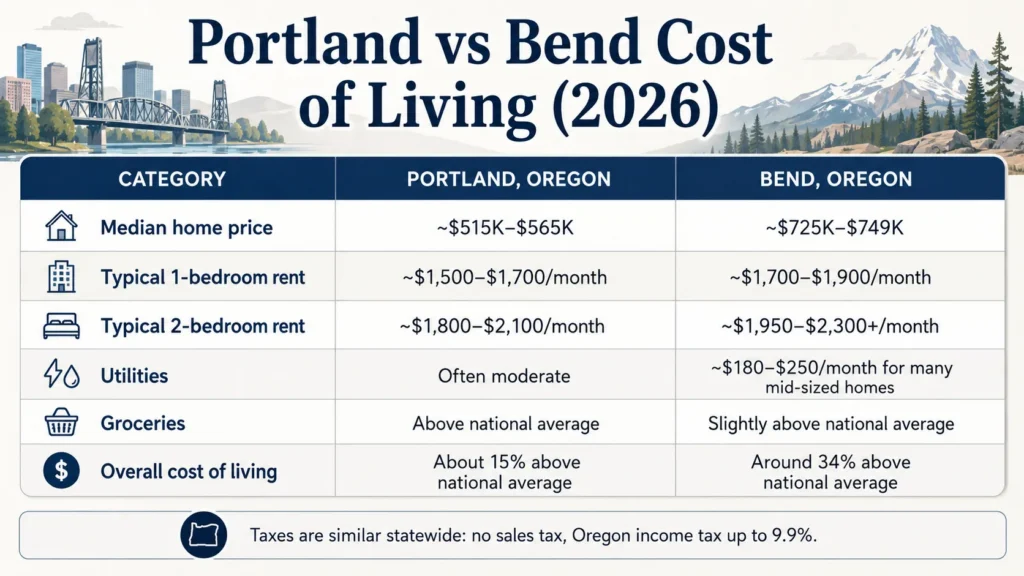
Here is a practical 2026 snapshot:
| Category | Portland, Oregon | Bend, Oregon |
|---|---|---|
| Median home price | ~$515K–$565K | ~$725K–$749K |
| Typical 1-bedroom rent | ~$1,500–$1,700/month | ~$1,700–$1,900/month |
| Typical 2-bedroom rent | ~$1,800–$2,100/month | ~$1,950–$2,300+/month |
| Utilities | Often moderate, sometimes below national average | ~$180–$250/month for many mid-sized homes |
| Groceries | Above national average | Slightly above national average, with a “mountain tax” effect |
| Overall cost of living | About 15% above national average | Around 34% above national average |
The Surprising Truth for Buyers
The biggest surprise for many Portland movers is this: for buying a home, Bend is now significantly more expensive than Portland.
That does not mean every Portland home is cheaper than every Bend home. Portland has expensive neighborhoods, and Bend has more affordable pockets. But when you compare median or typical home prices, Bend is no longer the affordable alternative many Portland residents remember.
Bend’s housing market was pushed up by remote work, lifestyle demand, limited buildable land, and years of relocation pressure. The market has cooled from the frenzy years, but prices are still high.
Taxes Are Not the Main Difference
Taxes are not the deciding factor between Portland and Bend because both cities are in Oregon.
Both benefit from Oregon’s lack of a general sales tax. That helps with everyday purchases, furniture, appliances, vehicles, and relocation costs. Both are also subject to Oregon’s state income tax, which can reach up to 9.9% for higher earners.
So if you are comparing Portland vs Bend Oregon, taxes do not create a major difference. The real comparison comes down to housing, lifestyle, weather, transportation, and job market depth.
Housing – Trading Square Footage for Sunshine
If you own a home in Portland, the first real question is usually: “What will my Portland home sale buy me in Bend?”
The answer depends on where you are selling in Portland and where you want to buy in Bend.
A Portland homeowner selling in a strong neighborhood may bring enough equity to compete well in Bend. But someone expecting to trade a standard Portland home for a larger Bend home near trails, schools, restaurants, and open space may be surprised. In Bend, lifestyle locations are priced aggressively.
Compare housing styles, locations, and amenities in our Bend neighborhood guide.
What a Portland Home Sale Buys in Bend
A Portland sale may give you a strong down payment, but it may not automatically upgrade your square footage.
If you are moving from a more affordable Portland neighborhood and trying to buy in one of Bend’s most desirable areas, you may find that your budget buys less house than expected. If you are selling in a high-demand Portland neighborhood and moving to Eastside or Southeast Bend, your options may feel much better.
This is where neighborhood flexibility matters. The broader your Bend search, the more realistic your budget becomes.
The Westside Premium
The Westside Premium is the first Bend housing lesson Portland buyers need to understand.
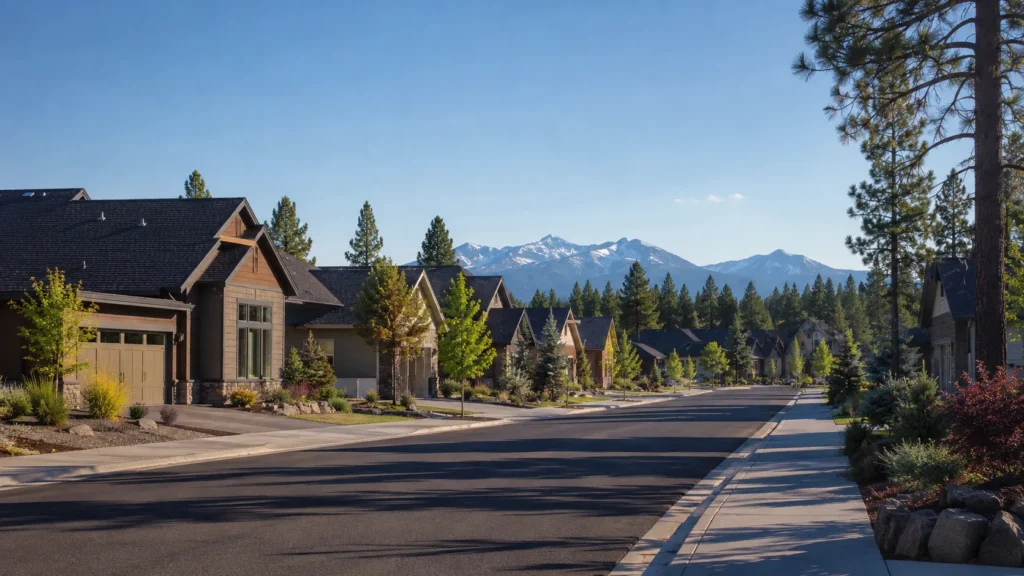
Homes west of Highway 97, especially near NorthWest Crossing, River West, Old Bend, Galveston, and the Old Mill area, often carry the strongest pricing. These areas are popular because they offer the Bend lifestyle people picture before they move: walkability, parks, trails, restaurants, breweries, established streets, and quick access to recreation.
For Portland transplants, the Westside can feel familiar in a good way. It has some of the neighborhood character and walkability people like in Portland, but with more sun, easier trail access, and a smaller-town pace. The trade-off is price.
Eastside Bend, Southeast Bend and Redmond
If your goal is more square footage, newer construction, a larger garage, or a lower purchase price, you may need to look east or southeast in Bend.
These areas can offer more home for the money, but they are usually more car-dependent and may not offer the same walkable lifestyle as the Westside. For many buyers, that trade is worth it.
Some Portland movers also include Redmond in the search. Redmond is about 20 minutes north of Bend and often gives buyers more space, newer homes, and a lower price point while still keeping them close to Central Oregon recreation and the airport.
So the housing trade is not just Portland vs Bend. It is:
Do you want walkability and lifestyle access, or more square footage and value?
For many Portland transplants, Bend is less about getting a bigger house and more about getting a different life.
Lifestyle & Weather
This is where Bend wins people over.
Portland has its own magic: big trees, established neighborhoods, music, restaurants, bookstores, parks, food carts, coffee, culture, and creative energy. For many people, Portland is still one of the most interesting cities in the Pacific Northwest.
But if you are tired of long grey stretches, traffic, city noise, or the feeling that outdoor recreation requires planning around weather, Bend starts to look very appealing.
Compare snowfall, seasonal temperatures, wildfire smoke, and winter preparation in our Bend weather and climate guide.
What Bend Gains
Bend gets around 300 days of sun a year, and for Portland movers, that difference is real.
In Portland, the long rainy season can shape your mood, your weekends, and your routines. In Bend, winter still exists, but there are more bright days and more chances to be outside year-round.
Bend also puts recreation closer to daily life. Mt. Bachelor is roughly 30 minutes away. The Deschutes River runs through town. Trails, mountain biking, hiking, paddleboarding, skiing, climbing, and camping are part of normal life, not just weekend trips.
Bend also has a smaller-town safety feel. It is not perfect, and it is not as small as it used to be, but daily life often feels calmer and more manageable than Portland.
What Bend Loses
Bend is not Portland with more sunshine.
You lose some things when you leave Portland. You lose the big-city food scene, the arts variety, the music calendar, the larger airport access, the more diverse job market, and stronger public transit.
You also lose Portland’s mild winters.
Bend has real snow. Winters are colder, drier, and more demanding. You need to be ready for snow tires, icy mornings, shoveling, winter driving, and a four-season lifestyle. For skiers and snowboarders, that is part of the appeal. For someone who dislikes snow, it can become tiring quickly.
The Real Lifestyle Question
The lifestyle question is not “Which city is better?”
It is “Which daily life do you actually want?”
Portland gives you urban variety, food, culture, and a deeper city experience. Bend gives you sun, space, outdoor access, and a smaller community built around recreation.
The Portland movers who do best in Bend are not just running away from rain or traffic. They are moving toward a lifestyle they genuinely want.

Jobs & Commute
Portland has the deeper job market. That is one of the clearest differences between the two cities.
If you work in technology, design, marketing, healthcare, government, education, logistics, manufacturing, restaurants, creative industries, or professional services, Portland gives you more employers, more networking, and more job mobility.
Bend’s job market is smaller and more specialized. That does not mean there are no jobs. It means the local market has fewer backup options if your role changes.
Review industries, employers, remote work, and local wages in our Bend jobs and economy guide.
Portland’s Deeper Job Market
Portland gives workers more choice. There are more companies, more industries, more specialized roles, and more opportunities to change jobs without leaving the region.
That matters if your career depends on local employers. It also matters if you are moving with a partner or spouse who will need to find work after the move.
Portland is simply a stronger job market overall.
Bend’s Remote Work and Local Economy
Bend’s economy is built around a different mix.
The strongest local anchors include healthcare, education, tourism, hospitality, construction, outdoor recreation, professional services, and a growing tech and startup scene. OSU-Cascades also adds an important education and research presence to the local economy.
Remote work has become one of the biggest reasons Portland residents can move to Bend. Many bring Portland, Seattle, Bay Area, or national salaries with them while living in Central Oregon.
That can work very well, but it also creates a planning issue. If your remote job changes, the local Bend market may not offer the same number of replacement roles.
Commute and Transportation Differences
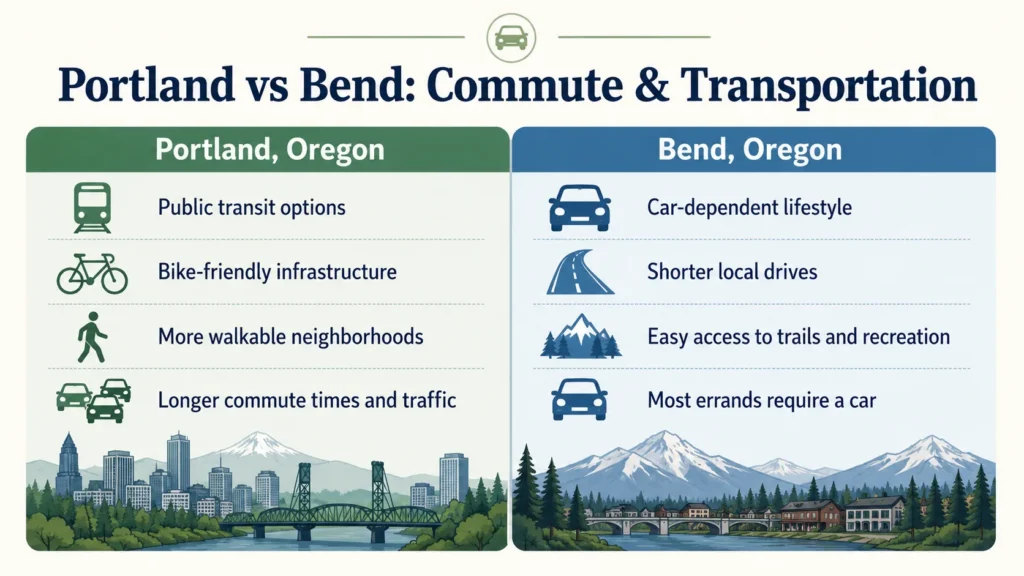
Portland has traffic, but it also has public transit, bike infrastructure, walkable neighborhoods, and more ways to live with one car or no car in certain areas.
Bend is simpler geographically, but more car-dependent.
Most residents drive for errands, groceries, school, work, trailheads, skiing, and weekend plans. You may not deal with Portland-style freeway congestion every day, but you will probably use your car more often.
For Portland movers used to biking, walking, or taking transit, that is a real adjustment.
What Portland Transplants Love (and Miss)
Portland transplants often love Bend quickly, but the adjustment is real. The move is not only financial. It is cultural. Bend has a different pace, a different rhythm, and a different definition of convenience.
What Portland Transplants Love
Most Portland movers love the sunshine first. That may sound simple, but it changes daily life. More light means more time outside, more active weekends, and fewer months where the weather feels like something to endure.
They also love the pace. Bend feels easier and more manageable. You can get across town without planning your life around traffic. You can finish work and still get to a trail, the river, or a quick ski session depending on the season.
Many also love the tighter community feel. Bend is big enough to have good restaurants, schools, events, and services, but small enough that you start recognizing people.
For families, retirees, remote workers, and outdoor-focused buyers, that can be a major quality-of-life upgrade.
What Portland Transplants Miss
Portland transplants miss the food variety. Bend has good restaurants, breweries, coffee shops, and local favorites, but Portland is in a different league for dining, culture, music, and niche communities.
They also miss the airport. Redmond Municipal Airport is convenient and easy, but it does not offer the same nonstop access or flight volume as Portland International Airport.
They miss job options too. Even people who move with remote jobs sometimes feel the difference if their work situation changes. Some also miss Portland’s diversity, arts scene, neighborhood energy, and spontaneous city life.
The Cultural Adjustment
Life in Bend often means hauling gear. Skis, bikes, paddleboards, snow tires, hiking boots, river tubes, camping equipment, and layers for changing weather become part of the routine. For some people, that is the dream. For others, it is a reminder that Bend is not just a cleaner, sunnier Portland.
It is a different lifestyle. The Portland movers who adjust best are the ones who understand that before they arrive. They are not looking for Portland with better weather. They are looking for a smaller, sunnier, more outdoor-centered life in Central Oregon.
Frequently Asked Questions
Not usually if you are buying a home. Bend’s median home price is significantly higher than Portland’s in 2026. Some everyday costs are similar, and both cities share Oregon’s no-sales-tax advantage, but Bend’s housing market makes it more expensive for many buyers. Rent can also be slightly higher in Bend depending on the property and neighborhood.
It can be worth it if you want more sunshine, immediate outdoor access, a smaller-town feel, and a lifestyle built around trails, skiing, rivers, and Central Oregon recreation. It may not be worth it if you need a deep job market, big-city food and arts variety, strong public transit, or mild winters.
Bend is about 160 miles from Portland. The drive usually takes around 3 to 3.5 hours, depending on route, traffic, and winter pass conditions.
Portland has the stronger and deeper job market overall. Bend has opportunities in healthcare, education, tourism, hospitality, construction, outdoor recreation, and a growing tech and remote-work economy, but it is smaller and less diverse than Portland’s employment market.