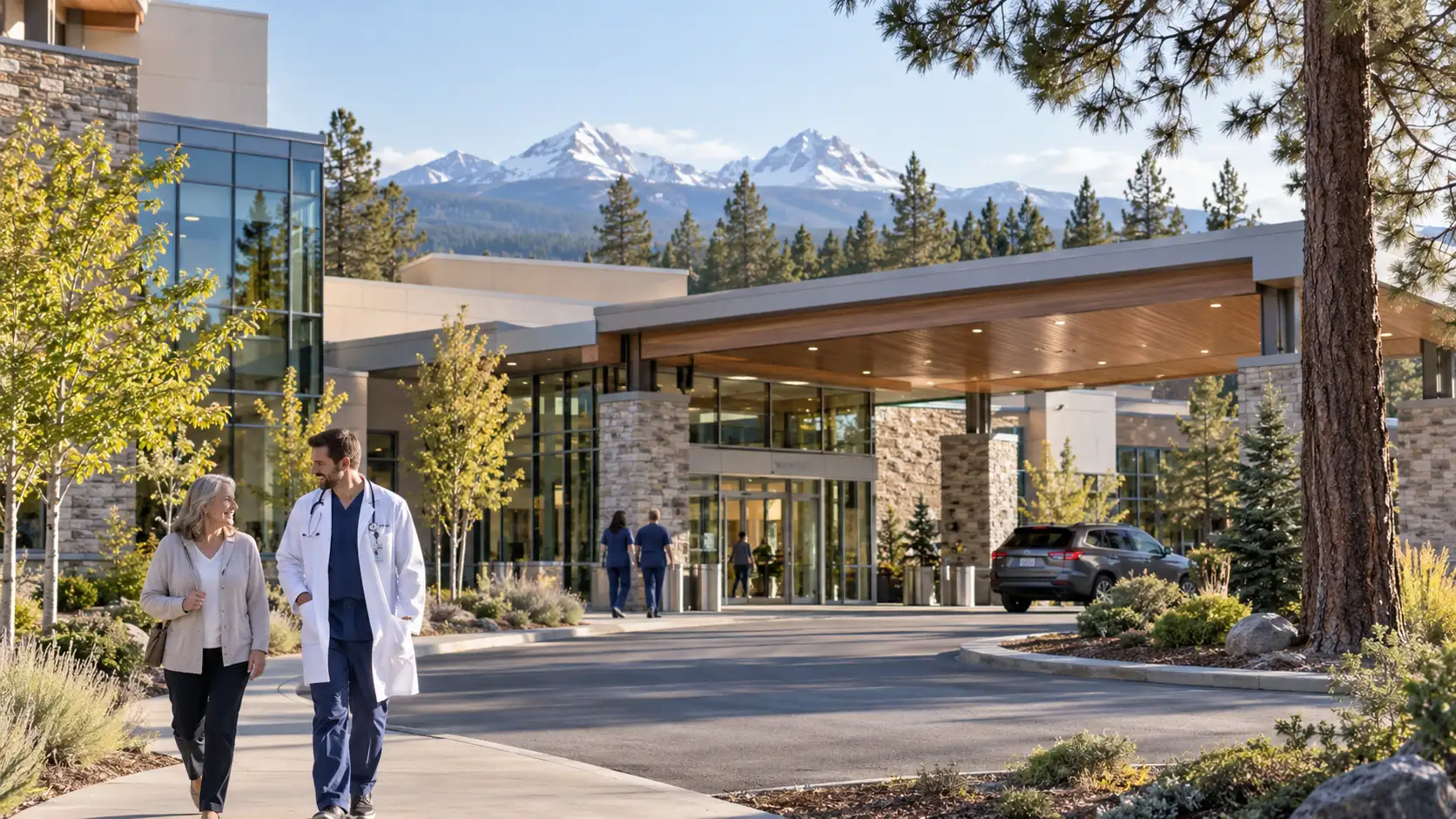
Healthcare is one of the most practical factors to evaluate when deciding whether Bend, Oregon is the right place to live. Outdoor recreation, scenery, and quality of life may attract people to the area, but access to hospitals, primary care, specialists, urgent care, and other medical services can have a major effect on everyday life.
Healthcare in Bend, Oregon includes hospital care, emergency services, primary care, specialty medicine, urgent care, rehabilitation, preventive care, and other services available through local and regional providers. The area does not offer the same breadth of medical resources as a major metropolitan area, so people moving to Bend should understand both the care available locally and when traveling outside the area may be necessary.
If you’re still researching the broader relocation picture, the Bend Oregon relocation guide can help you evaluate housing, lifestyle, transportation, employment, and other factors alongside healthcare.
What Healthcare Is Available in Bend Oregon?
Bend offers access to several levels of healthcare, from routine primary care and preventive appointments to emergency treatment and specialty services. Residents can find doctors, family medicine providers, urgent care, hospital services, diagnostic services, rehabilitation, and specialists serving a range of medical needs.
The right healthcare option depends on the type of care you need. A routine checkup, an unexpected illness, and a serious medical emergency should not all be handled in the same setting.
For someone moving to Bend, the most useful approach is to understand how the local healthcare system is organized before choosing a doctor or deciding where to live.

Why Healthcare Matters When Moving to Bend
Healthcare can become especially important for people who plan to stay in Bend for several years. Families may need pediatric and primary care, working adults may want convenient appointments, and retirees may place greater importance on specialists, prescriptions, preventive care, and hospital access.
Healthcare should also be considered alongside the overall cost of living. Medical expenses, insurance premiums, prescriptions, and out-of-pocket costs can affect the amount of income a household needs to live comfortably. Our Bend Oregon cost of living guide provides a broader look at expenses beyond healthcare.
Who Should Research Healthcare Before Moving?
Healthcare planning is particularly important for:
- Families with children
- Retirees and older adults
- People managing ongoing medical conditions
- People who regularly see specialists
- Individuals taking prescription medications
- People moving from another state
- Remote workers relocating permanently
- Anyone who expects frequent medical appointments
Even if you are generally healthy, identifying a hospital, urgent care option, primary care provider, and nearby pharmacy before moving can make settling into Bend much easier.
Hospitals in Bend Oregon
St. Charles Bend
St. Charles Bend is the major hospital serving Bend and many surrounding Central Oregon communities. It provides hospital-based care for patients who need emergency treatment, surgery, diagnostic services, inpatient care, and a range of specialty medical services.
For people relocating to Bend, knowing where the main hospital is located is useful even if they rarely need medical care. Hospital access becomes particularly important for families with young children, older adults, people with chronic conditions, and anyone who may require specialized treatment.
A hospital should not be viewed as a replacement for routine primary care. Instead, it forms one part of a larger healthcare system that includes doctors, clinics, urgent care, specialists, and other providers.
Emergency Care vs. Urgent Care in Bend
One of the most important healthcare questions for new residents is knowing when to use emergency care and when urgent care may be more appropriate.
Emergency departments are designed for serious or potentially life-threatening medical situations. Urgent care is generally intended for illnesses and injuries that need prompt attention but are not emergencies.
| Type of Care | Generally Used For | Planning Consideration |
| Emergency department | Serious or life-threatening conditions | Know the location before an emergency occurs |
| Urgent care | Non-life-threatening illnesses and injuries needing prompt attention | Check locations, hours, and accepted insurance |
| Primary care | Routine visits, preventive care, chronic conditions | Establish a regular provider after moving |
| Specialist | Ongoing or complex medical needs | Ask about referrals and appointment availability |
If a situation appears life-threatening, residents should use emergency services rather than waiting for an urgent care appointment.
Urgent Care in Bend Oregon
Urgent care can be useful when someone needs same-day or prompt medical attention but does not require emergency treatment. Common situations may include minor injuries, illnesses, infections, or other problems that cannot reasonably wait for a routine appointment.
For new residents, it is worth identifying the urgent care locations that are most convenient from home and work. Hours, appointment systems, wait times, accepted insurance, and available services can change, so checking directly with a clinic before visiting is a good practice.
Families may want to identify an urgent care option before children get sick, while active residents may find the same planning useful for sports and outdoor-related injuries.
Finding Primary Care Doctors in Bend Oregon
Finding a primary care provider should be one of the first healthcare tasks after moving to Bend. Primary care is often the starting point for routine examinations, preventive care, vaccinations, chronic condition management, and referrals to specialists.
Provider availability can vary, and some practices may have different policies regarding new patients. Because of that, it is better to research doctors before you need an appointment rather than waiting until you have an urgent medical issue.
When comparing doctors in Bend, consider:
- Whether the provider is accepting new patients
- Office location and travel time
- Office hours
- Insurance participation
- Telehealth availability, if offered
- Family medicine or internal medicine needs
- Pediatric care requirements
- Specialist referral procedures
- Laboratory or diagnostic services nearby
People relocating with children should also consider healthcare alongside education and family services. Our Bend Oregon schools guide can help families evaluate another major part of the relocation decision.
Specialty Healthcare Services in Bend
Bend residents can access specialty medical services in several areas. Depending on the condition and provider, local healthcare resources may include services related to orthopedics, cardiology, women’s health, pediatrics, dermatology, rehabilitation, physical therapy, and other specialties.
Access to specialists is an important consideration for people with ongoing medical needs. Before moving, check whether the specific specialist you need practices in Bend and whether a referral from a primary care provider is required.
Some highly specialized procedures or treatments may require travel outside Central Oregon. This does not necessarily make Bend unsuitable, but it is something to factor into a long-term relocation decision if you have complex healthcare requirements.
Healthcare for Families in Bend Oregon
Families often have more healthcare considerations than individuals. Parents may need pediatric care, routine vaccinations, preventive appointments, urgent care, dental services, and access to specialists.
When comparing healthcare options, families should look beyond the distance to a hospital. A convenient primary care provider, nearby urgent care, pharmacy access, and reasonable travel times can make everyday healthcare much easier to manage.
Families moving to Bend can also consider neighborhood characteristics when making their decision. Schools, commute times, outdoor access, and other amenities may be just as important as healthcare when choosing where to live.
Healthcare Considerations for Retirees Moving to Bend
Healthcare is often one of the most important relocation considerations for retirees. Someone planning to spend many years in Bend may want to evaluate hospital access, primary care availability, specialists, prescription services, rehabilitation, and emergency care before choosing a home.
Retirees should also think about healthcare needs that could change over time. A neighborhood that works well for an active retiree may have different practical advantages than one that offers shorter trips to medical facilities and everyday services.
Our Bend retirement communities guide provides additional information for people comparing retirement-focused living options in the area.
How Healthcare Can Affect Where You Live in Bend
Healthcare access can influence the choice of neighborhood, especially for households that expect frequent medical appointments. Travel time to hospitals, clinics, pharmacies, and major roads can become more important than it initially appears.
However, healthcare should be considered as one part of the neighborhood decision rather than the only factor. Walkability, schools, commute, recreation, housing costs, and overall lifestyle can all influence which part of Bend makes the most sense.
The Best Bend Oregon neighborhoods guide can help you compare communities based on different lifestyle priorities.
Healthcare and the Cost of Living in Bend
Healthcare costs are not limited to doctor visits. Insurance premiums, deductibles, prescriptions, specialist appointments, transportation, and other out-of-pocket expenses can all affect a household budget.
People relocating from a lower-cost area should account for healthcare alongside housing, utilities, transportation, food, and other recurring expenses. Comparing expected income with total living expenses can make a relocation decision more realistic.
If you’re trying to determine how much income you may need in Bend, the Bend Oregon salary calculator guide can be used alongside a broader household budget.
Healthcare for People Moving From Out of State
Moving to Bend from another state can involve more than transferring your belongings. Healthcare records, insurance information, prescriptions, and provider relationships may also need to be transferred.
Before moving, make a list of current doctors, medications, specialists, pharmacies, and ongoing treatments. Request medical records when necessary and verify that your insurance plan and preferred providers will work after the move.
It is also smart to refill essential prescriptions before the transition if appropriate and make sure you know how to access care during the period between leaving your current provider and establishing care in Bend.
For a broader move-planning checklist, see BendZeit’s Bend relocation checklist.
Healthcare and Bend’s Climate and Outdoor Lifestyle
Bend’s outdoor lifestyle can be a major attraction for residents, but it also means healthcare planning should account for the activities people participate in throughout the year.
Residents may spend significant time hiking, cycling, skiing, snowboarding, climbing, or participating in other outdoor activities. Knowing where to seek care for minor injuries versus emergencies can be useful for active households.
Weather can also influence daily life and travel. People planning a long-term move can review BendZeit’s Bend Oregon climate and weather guide to understand the seasonal conditions that may affect transportation and outdoor activities.
How to Set Up Healthcare After Moving to Bend
Once you arrive in Bend, establishing healthcare does not have to happen all at once. Start with the providers and services that are most important to your household.
A practical setup process can include:
- Confirm your health insurance coverage.
- Identify the nearest hospital and urgent care option.
- Find a primary care provider if you do not already have one.
- Transfer important medical records.
- Locate a convenient pharmacy.
- Schedule routine appointments that you have been postponing.
- Identify specialists you may need regularly.
- Keep emergency and insurance information easily accessible.
Doing this early can prevent unnecessary stress later, particularly if someone in the household becomes sick or needs medical attention soon after moving.
Is Bend Oregon a Good Place for Healthcare?
Bend can meet many everyday healthcare needs through its hospital system, primary care providers, urgent care options, specialists, and other medical services. The important consideration is whether the available local resources match your personal healthcare requirements.
For someone who primarily needs routine care, preventive appointments, occasional urgent care, and access to general specialists, Bend offers a range of healthcare resources. Someone requiring highly specialized or complex treatment should research the availability of that specific care and understand whether travel outside Bend could be necessary.
That distinction is important when comparing Bend with larger metropolitan areas. Healthcare quality and healthcare convenience are not always the same thing, so prospective residents should evaluate the specific services they personally need.
Final Thoughts on Healthcare in Bend Oregon
Healthcare is an important part of evaluating what life in Bend will actually look like after moving. The area provides access to a major hospital, primary care providers, urgent care, specialists, preventive services, rehabilitation, and other medical resources.
The best approach is to research healthcare based on your own circumstances rather than relying on a general statement about whether Bend has “good healthcare.” Families, retirees, active adults, remote workers, and people with ongoing medical needs can all have very different requirements.
Before relocating, identify your preferred primary care options, understand where you would go for urgent or emergency care, review your insurance network, and consider healthcare access when comparing neighborhoods. Taking these steps gives you a more realistic picture of whether Bend is the right long-term fit for you.
Frequently Asked Questions
St. Charles Bend is the major hospital serving Bend and surrounding Central Oregon communities. It provides emergency, inpatient, surgical, diagnostic, and specialty medical services.
Bend has access to hospitals, primary care, urgent care, specialists, rehabilitation, preventive care, and other medical services. Whether it meets your needs depends on the type and level of healthcare you require.
Bend has urgent care options for illnesses and injuries that need prompt attention but are not life-threatening emergencies. New residents should check current locations, hours, services, and insurance information before visiting.
Start by checking local medical practices and provider directories for doctors accepting new patients. Compare location, insurance participation, appointment availability, office hours, and the type of care offered.
Yes. Healthcare resources in Bend include access to a variety of specialty services. People who need highly specialized treatment should verify whether the specific specialty and treatment they need are available locally.
Healthcare should be one of the main factors retirees evaluate before moving to Bend. Hospital access, primary care, specialists, urgent care, pharmacies, rehabilitation, and future healthcare needs are all worth considering.
It can. People who expect frequent medical appointments may prefer a location with convenient access to hospitals, clinics, pharmacies, and major roads, while other residents may prioritize schools, recreation, walkability, or commute times.
Research your insurance network, identify potential primary care providers, locate nearby urgent and emergency care, transfer important medical records, organize prescriptions, and identify specialists you may need after the move.