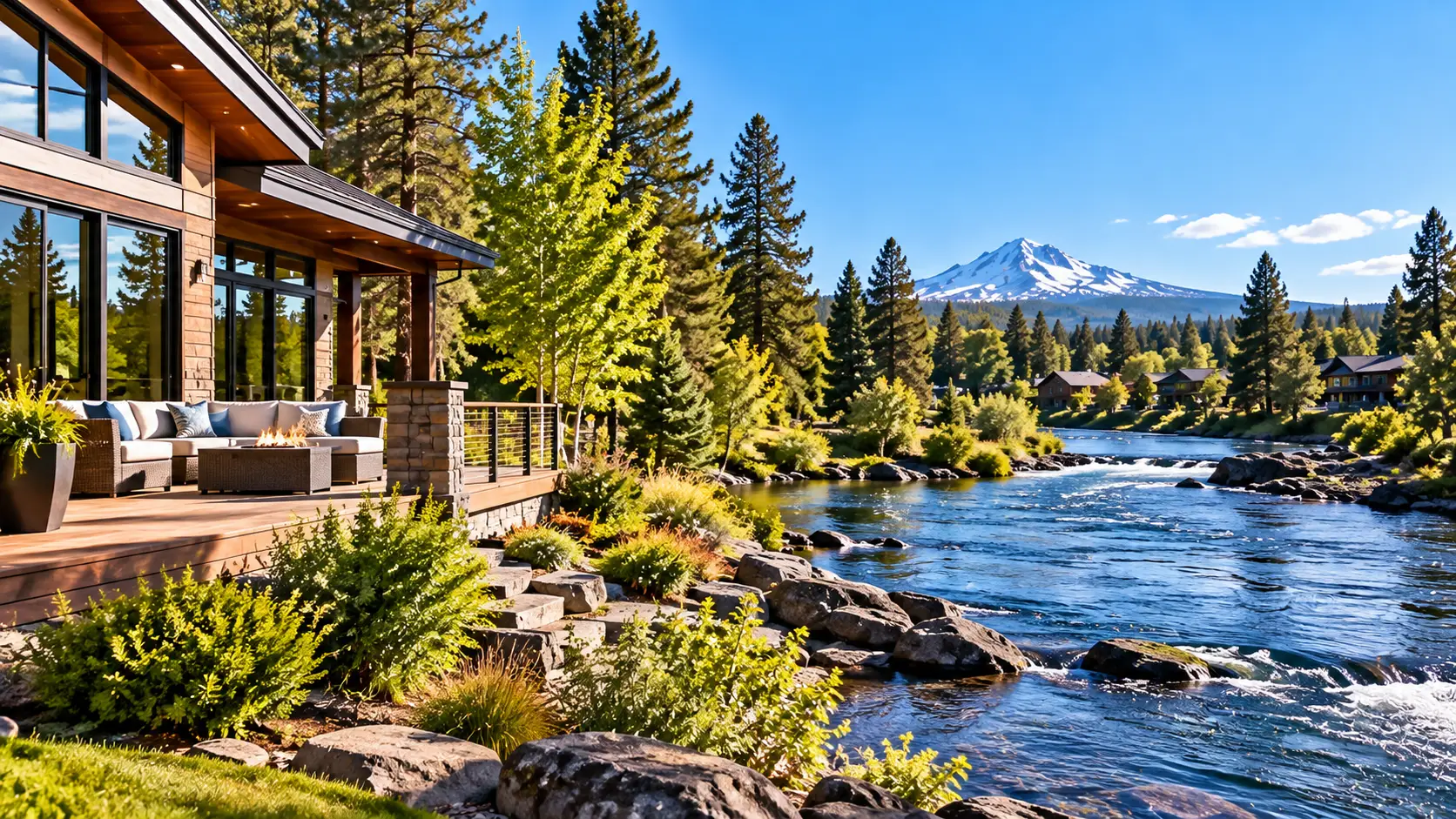


There is something very different about owning a home along the Deschutes River. In Bend, the river is not just a scenic feature in the distance. It runs through the community, shapes several neighborhoods, and gives homeowners opportunities to enjoy walking trails, mature trees, open space, and outdoor recreation close to home.
For buyers searching for riverfront homes in Bend, Oregon, however, the search needs to go beyond finding a house with a beautiful view. A property that sits directly on the river is different from one that simply overlooks it, and both can be very different from a home that is only a short walk from the water.
That distinction matters when you are comparing prices, evaluating insurance, planning improvements, or thinking about the property’s long-term resale potential. The river may be the reason you notice a home, but the land, house, access, restrictions, and ongoing costs are what determine whether it is actually the right purchase.
What Is a Riverfront Home in Bend?
A true riverfront property directly borders the Deschutes River. That is different from a river-view property, where the home has a view toward the water but another parcel, road, trail, or piece of public land may sit between the home and the river.
There is also a third category worth considering: homes that are close to the river and provide convenient access to trails or parks but do not have either direct frontage or a meaningful river view. These properties can still offer much of the lifestyle buyers associate with living near the Deschutes, often without the premium attached to direct frontage.
When looking at listings, pay attention to the exact wording. “Riverfront,” “river view,” “river access,” and “near the river” are not interchangeable descriptions, and they should not be treated as though they represent the same property experience.

Where Can You Find Riverfront Homes in Bend, Oregon?
The Deschutes River passes through several parts of Bend, so river-oriented properties are not limited to one neighborhood. Buyers may encounter homes around areas such as Old Bend and River West, as well as properties farther along the river corridor and outside the central part of the city.
The experience can be very different depending on the location. A home close to downtown may combine river access with restaurants, shops, parks, and a more walkable lifestyle, while a property farther from central Bend may offer more privacy, land, and a quieter setting but require more driving for everyday errands.
This is why it helps to evaluate the neighborhood separately from the property itself. BendZeit’s Bend neighborhoods guide can help buyers compare the broader character of different areas before narrowing the search to individual riverfront properties.
Old Bend
Old Bend is particularly attractive to buyers who want the Deschutes River to be part of their daily lifestyle while remaining close to downtown. The area has mature landscaping, established homes, parks, river access, restaurants, and other amenities that make it appealing to people who would rather walk or bike for some everyday activities.
Not every Old Bend property is riverfront, of course. Buyers should look carefully at the individual lot, its relationship to the river, and what kind of access or views the property actually provides. Older homes can also bring renovation and maintenance considerations that should not be overlooked simply because of the location.
River West
River West offers another combination that attracts buyers: proximity to the Deschutes River and easy access to many of Bend’s westside amenities. Restaurants, breweries, trails, downtown, and outdoor recreation are all part of the appeal.
Here again, being in a river-oriented neighborhood does not mean that every property is directly on the water. Some homes are better described as river-adjacent or river-access properties, which can still be highly desirable for buyers who care more about lifestyle and convenience than private frontage.
How Much Do Riverfront Homes in Bend Cost?
There is no single average price that accurately represents riverfront homes in Bend. The properties are too varied, and even two homes with similar river frontage can have very different values depending on the lot, house, privacy, views, improvements, and location.
Direct frontage generally makes a property more limited and therefore potentially more valuable, but buyers should not assume that every riverfront home deserves the same premium. A renovated home with a usable outdoor area and unobstructed views is a very different proposition from an older property that needs substantial work.
The size and usability of the land matter as well. A larger parcel with mature trees, privacy, usable outdoor space, and a desirable orientation toward the river may attract a very different buyer than a smaller property with limited outdoor space.
The best way to establish whether a particular asking price makes sense is to compare it with genuinely similar properties and recent sales. Bend Oregon housing market update can provide broader market context, but a riverfront property should ultimately be evaluated against comparable river-oriented homes rather than the citywide median alone.
Why Do Riverfront Properties Command a Premium?
Part of the appeal is scarcity. There are only so many properties that can directly border the Deschutes River, and not every parcel with river frontage can be developed or used in exactly the same way.
The lifestyle is another major factor. For some buyers, owning a riverfront home means being able to walk outside and immediately enjoy the scenery rather than driving to the river on weekends. Mature trees, privacy, outdoor living, river sounds, and convenient trail access can all contribute to the property’s appeal.
That does not mean every property with a river view deserves a large premium. Buyers should separate the emotional appeal of the setting from the actual characteristics of the property and make sure the price is supported by comparable sales, condition, location, and the rights that come with the land.
Riverfront vs. River View: Which One Are You Actually Looking For?
This is one of the first questions buyers should answer.
If your priority is having direct access to the river from your own property, you need actual river frontage. If you mainly want to see the water from your living room or enjoy the scenery, a river-view property may give you what you want without the same price premium.
A nearby home can be an even more practical choice. You may still be able to walk to the river and trails while having a larger selection of properties and potentially fewer concerns related to waterfront maintenance or access.
Before starting your search, decide what the river means to you. If it is primarily about the view, your options are much broader. If private frontage is essential, expect a smaller inventory and a more competitive search.
What Should You Inspect Before Buying a Bend Riverfront Property?
A riverfront home deserves the same inspection as any other property, but there are additional areas that deserve attention because of its location.
Start with the house itself. The roof, foundation, plumbing, electrical system, HVAC, windows, insulation, and other major components should be evaluated according to the home’s age and condition. Then move beyond the walls and look at drainage, landscaping, retaining structures, decks, patios, paths, fences, trees, and other outdoor features.
The relationship between the house and the river is equally important. Look at the slope of the property, how water moves across the lot, whether there are areas where moisture could collect, and whether any structures or improvements require ongoing maintenance.
BendZeit’s Bend Oregon home inspection guide provides additional guidance on the inspection process and the types of issues buyers should investigate before closing.
Flood Risk Should Be Part of Your Due Diligence
Being near a river does not automatically mean that a home is in a high-risk flood area. At the same time, buyers should never make assumptions about flood exposure simply because a property appears elevated or because the seller says there have been no problems.
Flood-zone information, property elevation, drainage, surrounding land, and local requirements can all affect the risk. If you are seriously considering a property, review the applicable information for that specific address rather than relying on a general map of the surrounding neighborhood.
Insurance should be checked at the same time. A property can fit comfortably within your purchase budget and become much more expensive once insurance and other ongoing ownership costs are included.
How Does Insurance Work for Riverfront Homes?
Insurance is something buyers should investigate before making a final commitment to a riverfront property.
The cost and availability of coverage can depend on several characteristics of the home, including its location, age, construction, replacement cost, wildfire exposure, and potential flood risk. A riverfront property may also have decks, retaining walls, landscaping, trees, or other features that affect the overall insurance picture.
Ask for an insurance quote using the actual property address. If flood coverage or another specialized policy is relevant, find out about it early rather than waiting until the closing process is already underway.
This is especially important when comparing two homes with similar asking prices. The property with the lower purchase price is not necessarily the cheaper home to own once insurance, taxes, maintenance, and other recurring expenses are included.
Do Riverfront Homes Require More Maintenance?
They can, although the amount varies considerably from property to property.
A riverfront home may have extensive landscaping, mature trees, outdoor structures, retaining features, decks, pathways, irrigation, or other improvements that require regular attention. Maintaining those features is part of preserving the experience that attracted you to the property in the first place.
Trees deserve particular attention. Mature vegetation is one of the reasons riverfront properties can feel private and established, but trees also require maintenance and can become a liability when they are damaged or unstable.
Ask the seller about previous maintenance and repairs, and have important exterior features evaluated as part of the inspection process. A beautiful setting is valuable, but buyers should understand the work required to keep it that way.
Can You Make Improvements to a Riverfront Property?
Do not assume that owning riverfront land gives you complete freedom to change it.
Depending on the property, there may be local land-use requirements, environmental considerations, setbacks, access arrangements, HOA rules, or other restrictions that affect what you can build or change. Projects such as fences, retaining walls, decks, landscaping, grading, or other improvements may require approval.
This matters particularly when buyers purchase a property with plans for future improvements. If your decision depends on adding a large deck, creating a private path, changing the landscaping, or modifying the shoreline area, verify that the project is actually permitted before assuming it can be done.
A real estate agent can help identify the questions to ask, but buyers should obtain confirmation from the appropriate authorities or professionals before relying on a future project as part of the property’s value.
What Should Buyers Know About River Access?
The phrase “river access” can mean different things, so ask for specifics.
A property may have a private path to the water, shared access, access through an easement, or simply convenient access to a nearby public trail. These arrangements can create very different experiences for the owner.
Before purchasing, find out exactly where the access begins and ends, who can use it, whether it is shared, and whether there are any recorded agreements or restrictions affecting it.
You should also determine whether the shoreline itself is part of the property. A house can sit immediately beside the river without giving the owner unrestricted rights to every part of the surrounding river corridor.
What About River Views?
A beautiful river view can be one of the strongest features of a Bend home, but buyers should think about whether the view is likely to remain the same.
Look at what sits between the house and the river. If another private parcel, undeveloped land, or mature vegetation is responsible for the current view, consider how changes on those properties could affect what you see in the future.
Trees can grow, neighboring properties can change, and construction can alter sightlines. A buyer paying a substantial premium for a view should understand why that view exists and what could potentially change it.
The best river-view purchase is not necessarily the home with the most impressive view on the day of the showing. It is the property where the buyer understands the surrounding land and has a reasonable idea of what is likely to remain visible.
Are Riverfront Homes a Good Investment?
A riverfront property can be an attractive long-term purchase, but direct frontage should not be treated as a guarantee of appreciation.
Unique homes can attract buyers who are willing to pay more for a particular setting, but the pool of potential buyers may also be smaller. Someone who loves the river may see enormous value in the property, while another buyer may prefer a larger house, better location, or lower-maintenance property for the same amount of money.
Resale value still depends on the fundamentals: location, condition, lot characteristics, insurance costs, maintenance, overall housing demand, and the price you paid.
If you are considering a riverfront home as an investment, BendZeit’s Bend Oregon housing market forecast can provide broader market context. A specific property, however, should be evaluated using comparable riverfront and river-oriented sales rather than relying on a general market forecast.
Buying a Riverfront Home as Your Primary Residence
For an owner-occupant, the biggest benefit may be the everyday experience.
Instead of treating the Deschutes River as somewhere you visit when you have free time, it becomes part of the setting around your home. Morning walks, evening outings, outdoor meals, mature landscaping, and easy access to trails can all become part of your normal routine.
The question is whether that lifestyle justifies the additional cost.
If buying direct riverfront stretches your budget so far that you have little room for maintenance, travel, recreation, or other priorities, the location may not be worth the premium. A home a few blocks away could provide much of the same Bend lifestyle at a lower cost.
On the other hand, if private frontage and the setting itself are the reason you are moving to Bend, paying more for the right property may make sense.
Buying a Riverfront Home as a Second Home
Second-home buyers should think carefully about maintenance and management.
A property that sits empty for part of the year still needs to be monitored. Landscaping, irrigation, heating and cooling systems, security, trees, seasonal weather, and unexpected repairs all need attention even when you are not there.
If you are considering short-term rental use, do not assume that a riverfront property can automatically be operated as a vacation rental. Local regulations, zoning, HOA rules, insurance requirements, and property-specific restrictions should all be reviewed before purchasing with rental income in mind.
The river can make a property attractive to visitors, but that does not override the rules governing how the property can be used.
What Should You Budget Beyond the Purchase Price?
The mortgage is only one part of the cost of owning a riverfront home.
Buyers should also account for property taxes, homeowners insurance, possible flood coverage, utilities, landscaping, tree maintenance, repairs, HOA dues if applicable, and the cost of maintaining outdoor structures.
These expenses can be more noticeable on properties with extensive landscaping or unique features. A large deck, mature trees, irrigation system, retaining structures, or private access can all add to the amount of work required over time.
For someone relocating to Bend, it helps to look at the property as part of the complete household budget rather than evaluating the purchase price in isolation. BendZeit’s Cost of Living in Bend guide can help put housing and other recurring expenses into a broader financial context.
How to Evaluate a Riverfront Home During a Showing
Take your time outside. A typical home showing naturally draws your attention toward the kitchen, bathrooms, bedrooms, finishes, and overall condition of the house. With a riverfront property, the land around the house is just as important, so walk the property carefully if the showing conditions allow it.
Look at the slope, drainage, mature trees, retaining structures, decks, paths, fencing, outdoor living areas, and the actual relationship between the house and the river. Listen for traffic, nearby trail activity, neighboring properties, and other sounds that might not be obvious during a quick daytime showing.
If possible, visit the area at a different time of day. A peaceful afternoon may feel very different on a busy weekend, and seasonal conditions can also change how the property feels.
Questions to Ask Before Making an Offer
Before making an offer on a riverfront home, make sure you understand exactly what comes with the property.
Ask whether the home has direct river frontage or only a river view, how much frontage is included, and whether the access is private or shared. Find out whether there are easements, HOA restrictions, flood-zone considerations, previous moisture issues, retaining structures, or limitations on exterior improvements.
It is also worth asking about the history of the property. Previous repairs, landscaping work, drainage improvements, insurance claims, and major renovations can tell you a great deal about what it may cost to maintain the home in the future.
The more unusual the property, the more important this due diligence becomes.
How Riverfront Homes Fit Into the Bend Housing Market
Riverfront properties represent a small and distinctive part of the Bend real estate market. They should not be compared directly with the median home in a standard subdivision because the land, setting, scarcity, and buyer profile are fundamentally different.
That does not mean riverfront homes operate independently from the broader market. Mortgage rates still influence purchasing power, inventory still affects negotiating conditions, and buyers still compare price with condition and location.
For that reason, the strongest analysis combines broader Bend market conditions with property-specific comparable sales. A riverfront home may justify a premium, but the premium still needs to make sense relative to other properties competing for the same buyers.
How to Decide Whether Riverfront Living Is Worth It
The right riverfront property is not necessarily the one with the biggest house or the most dramatic listing photos. It is the one where the location, property rights, condition, maintenance requirements, insurance, and purchase price all make sense together.
If you mainly want access to the Deschutes River and nearby trails, a home close to the river may provide most of what you want without paying for direct frontage. If privacy, water views, and having the river immediately outside your property are central to your idea of living in Bend, a true riverfront home may justify the additional cost.
The important thing is to know which experience you are actually buying before you pay the riverfront premium.
Frequently Asked Questions
Yes. Riverfront properties do come onto the market in Bend and the surrounding Deschutes River corridor, although true homes with direct river frontage are considerably less common than homes that offer river views or convenient river access. Inventory changes frequently, so buyers should evaluate current listings individually.
A riverfront home directly borders the river, while a river-view home simply has a view toward the water. Another property may be close to the river or provide trail access without having either direct frontage or a significant view. These differences can have a major effect on price and property rights.
They can command a premium because direct river frontage is limited and desirable. However, there is no standard price for riverfront homes. Lot size, frontage, views, privacy, location, home condition, renovations, and outdoor features can all substantially affect the value of an individual property.
In addition to a standard home inspection, pay close attention to drainage, moisture, foundations, retaining structures, decks, landscaping, mature trees, exterior improvements, and the condition of the land between the home and river. Buyers should also investigate flood exposure, insurance, access rights, easements, and restrictions affecting the property.
Insurance requirements depend on the individual property. Buyers should obtain an insurance quote before committing to the purchase and ask about flood exposure, wildfire risk, replacement costs, and other property-specific factors that could affect coverage and premiums.
Not necessarily. Local land-use requirements, environmental considerations, setbacks, easements, HOA rules, and other restrictions may affect what can be changed. If a future improvement is important to your buying decision, confirm that it is permitted before assuming you can build it.
It can be, but river frontage does not guarantee appreciation. Buyers should consider comparable sales, purchase price, property condition, insurance, maintenance, location, and broader Bend housing conditions. A unique property can be highly desirable while still being a poor investment if the buyer significantly overpays.
It depends on your priorities. Direct riverfront offers a rarer setting and potentially greater privacy and access, while a nearby property can provide many of the same recreational and lifestyle benefits without the same premium or waterfront-related responsibilities. Comparing both options is often the best way to decide whether direct frontage is worth the additional cost.