


Golf community homes in Central Oregon attract a very specific type of buyer. Some are investors looking for rental potential. Others are second-home buyers who want personal use, long-term appreciation, and access to golf, resort amenities, trails, restaurants, and outdoor recreation. Many are lifestyle buyers who want the property to work financially, but also want a place their family will actually enjoy.
That makes golf community investment properties Central Oregon a different category from traditional rental real estate.
A golf home in Tetherow, Broken Top, Pronghorn / Juniper Preserve, Eagle Crest, Bend Golf Club area, Meadow Lakes, or Sunriver-area communities may offer strong lifestyle value, scarcity, and resale appeal. But it can also come with higher HOA dues, membership costs, rental restrictions, seasonal demand, and larger maintenance responsibilities.
This guide explains how to evaluate golf homes for sale in Central Oregon from an investment perspective, including rental potential, appreciation, buyer fit, HOA and membership costs, risk factors, and due diligence before purchasing.
Quick Answer
Golf community homes in Central Oregon can be good investments when the property has a strong location, lifestyle appeal, rental flexibility, quality condition, and long-term resale demand. They are not always ideal for pure cash flow because HOA dues, resort fees, maintenance, management costs, and seasonal rental demand can reduce net income.
Are golf community homes good investments?
Golf community homes can be good investments, but the answer depends on the investment goal. A buyer seeking pure monthly cash flow may evaluate the property differently than a second-home buyer who wants personal use and long-term appreciation.
A strong golf community investment usually has:
- Desirable location
- Course frontage or views
- Strong resale demand
- Rental-friendly rules
- Updated interiors
- Low-maintenance ownership
- Reasonable HOA costs
- Access to amenities
- Clear buyer demand
The best properties often combine lifestyle value with scarcity. A home with golf views, resort access, and proximity to Bend or Redmond Airport may have a stronger long-term appeal than a generic home with no defining features.
Who should consider them?
Golf community investment properties are usually best for:
- Second-home buyers
- Lifestyle investors
- Retirees planning future use
- High-net-worth buyers
- Golfers
- Vacation-home buyers
- Remote professionals
- Investors seeking long-term appreciation
- Families wanting a recreational base in Central Oregon
They may not be ideal for investors who only want low-cost acquisition, simple long-term tenants, or maximum monthly cash flow.
What risks should buyers know?
Golf community ownership can be more complex than buying a standard single-family home.
Common risks include:
- HOA restrictions
- Short-term rental limits
- Club membership costs
- Resort fees
- Seasonal occupancy
- Higher maintenance
- Insurance costs
- Wildfire exposure
- Liquidity at resale
- Overpaying for lifestyle features
Before purchasing, buyers should review the full ownership picture, not just the listing price or projected rental income.

Why Investors Consider Golf Communities
Golf communities attract buyers because they offer something more than housing. They combine property ownership with recreation, lifestyle, scenery, and a sense of place. In Central Oregon, that can be especially powerful because golf communities often sit near trails, mountains, rivers, resorts, and high-demand relocation markets.
Scarcity
Scarcity is one of the strongest investment arguments for golf community real estate. There are only so many homes that back to a fairway, sit inside a private club community, or offer resort access near Bend, Redmond, or Sunriver.
Scarcity can support long-term value when demand remains steady. However, scarcity alone does not guarantee a good investment. The home still needs to be priced correctly, well-maintained, and located in a community with strong buyer appeal.
Lifestyle demand
Central Oregon buyers often purchase based on lifestyle. They want skiing, hiking, biking, golf, trails, rivers, sunshine, and a slower pace of life. Golf communities fit naturally into that lifestyle because they offer recreation close to home.
This lifestyle demand supports buyer interest from:
- California relocation buyers
- Washington buyers
- Retirees
- Remote workers
- Golfers
- Second-home owners
- Vacation-home buyers
A golf home that delivers a strong lifestyle experience may remain attractive even when the broader market becomes more selective.
Resort appeal
Resort communities such as Pronghorn / Juniper Preserve, Eagle Crest, Tetherow, and Sunriver-area golf properties can appeal to buyers who want amenities along with real estate.
Resort appeal may include:
- Golf access
- Pools
- Fitness centers
- Dining
- Spa services
- Trails
- Guest lodging nearby
- Property management options
- Vacation-home familiarity
This can strengthen owner enjoyment and rental demand, but it can also increase fees and ownership complexity.
Second-home ownership
Many golf community buyers are not full-time investors. They want a second home they can use several times per year while potentially renting it when not in use.
This hybrid strategy can work well when expectations are realistic. The property may not generate maximum cash flow, but it may offset expenses while providing personal lifestyle value.
Long-term resale strength
Golf community homes can have strong resale potential when they are in desirable locations with limited inventory. Properties with course frontage, views, updated interiors, and strong community amenities often appeal to future buyers.
Resale strength depends on:
- Community reputation
- Home condition
- HOA health
- Rental flexibility
- Views and orientation
- Buyer demand
- Total ownership cost
Best Central Oregon Golf Communities for Investment
Different golf communities serve different investment goals. Some are better for luxury appreciation. Some are better for vacation-home flexibility. Others may offer better value or full-time residential appeal.
Tetherow
Tetherow is one of Bend’s most recognizable modern golf communities. It appeals to buyers who want contemporary architecture, resort amenities, golf, trail access, and proximity to the route toward Mt. Bachelor.
Investment strengths may include:
- Modern luxury appeal
- Strong Bend location
- Resort lifestyle
- Golf and trail access
- Second-home buyer demand
- High-end resale potential
Important due diligence includes HOA rules, rental restrictions, resort-related costs, and whether the property’s design supports long-term buyer demand.
Broken Top
Broken Top offers a gated golf-community setting on Bend’s west side. It is more established than Tetherow and has a quieter, private residential feel.
Investment strengths may include:
- Gated community appeal
- Mature landscaping
- Westside Bend location
- Private club atmosphere
- Luxury buyer demand
- Strong full-time residential appeal
Broken Top may be better suited for long-term ownership and lifestyle preservation than aggressive vacation-rental strategies. Buyers should review HOA and club rules carefully.
Pronghorn / Juniper Preserve
Pronghorn / Juniper Preserve offers a destination-resort investment profile. It appeals to second-home buyers, golfers, luxury travelers, and owners who want high-desert scenery with resort amenities.
Investment strengths may include:
- Resort branding
- Golf and wellness amenities
- Luxury second-home appeal
- High-desert setting
- Guest-friendly environment
- Scarcity of premium resort homes
Buyers should evaluate resort fees, membership rules, rental program options, property management, and total carrying costs.
Bend Golf Club Area
The Bend Golf Club area has a more traditional private-club identity. It is not a modern resort investment play. Instead, its appeal comes from history, mature surroundings, private club culture, and convenient Bend location.
Investment strengths may include:
- Established Bend setting
- Historic club identity
- Mature landscaping
- Private club appeal
- Full-time resident demand
- Long-term neighborhood stability
Homes near Bend Golf Club may be more appropriate for lifestyle-focused buyers than short-term rental investors.
Eagle Crest Resort
Eagle Crest Resort near Redmond is one of Central Oregon’s most flexible resort-community options. It offers golf, pools, sports centers, trails, townhomes, vacation homes, and full-time residences.
Investment strengths may include:
- Resort amenities
- Vacation-home appeal
- Redmond-area value
- Airport access
- Multiple property types
- Lock-and-leave ownership
- Rental potential depending on rules
Buyers should carefully review HOA dues, resort assessments, rental rules, and management costs.
Meadow Lakes
Meadow Lakes near Prineville offers a more value-oriented golf lifestyle compared with Bend’s premium communities. It is centered around public golf access and small-town living rather than private resort prestige.
Investment strengths may include:
- More approachable pricing
- Public golf access
- Prineville value
- Retiree appeal
- Full-time residential potential
- Central Oregon growth exposure
Meadow Lakes may be stronger for value-focused lifestyle ownership than luxury appreciation.
Sunriver-Area Golf Properties
Sunriver-area golf properties appeal to buyers seeking vacation-home use, resort access, outdoor recreation, and rental potential. These properties can perform well when they are updated, rental-friendly, and positioned near amenities.
Investment strengths may include:
- Established vacation-home demand
- Golf access
- Family recreation
- Seasonal tourism
- Resort familiarity
- Strong owner-use appeal
Buyers should carefully review short-term rental rules, HOA fees, occupancy assumptions, and maintenance expectations.
Investment Types
Not every golf community investment has the same goal. The right strategy depends on how you plan to use the property, how much risk you can tolerate, and whether lifestyle or income matters more.
Full-Time Rental
A full-time rental strategy may work in some golf community areas, especially where there is demand from professionals, retirees, or long-term tenants. However, HOA rules may limit rentals, and higher purchase prices can make cash flow challenging.
Full-time rental buyers should evaluate:
- Long-term tenant demand
- HOA rental rules
- Rent-to-price ratio
- Maintenance costs
- Property taxes
- Insurance
- Market vacancy
Vacation Rental
Vacation rentals may be appealing in resort communities such as Eagle Crest, Pronghorn, Sunriver-area properties, and certain Bend communities where allowed. The potential upside is higher gross income during peak seasons.
The challenge is that income can be seasonal and expenses can be high.
Buyers should review:
- Short-term rental regulations
- HOA rules
- Permit availability
- Guest amenity access
- Furnishing costs
- Cleaning fees
- Management fees
- Seasonal occupancy
Second Home With Occasional Rental
This is one of the most common strategies for golf community buyers. The owner uses the home personally and rents it when not in use.
This approach is often more realistic than expecting maximum cash flow because the property serves both lifestyle and financial goals.
Long-Term Appreciation Play
Some buyers purchase golf community homes primarily for long-term appreciation. They focus on scarcity, location, views, architecture, and resale appeal.
This strategy works best when the buyer has a longer time horizon and does not depend on rental income to make the property affordable.
Lifestyle-First Investment
A lifestyle-first investment prioritizes enjoyment, family use, recreation, and long-term ownership. Financial performance still matters, but the property is not judged only by cash flow.
This is common among retirees, high-net-worth buyers, golfers, and second-home owners.
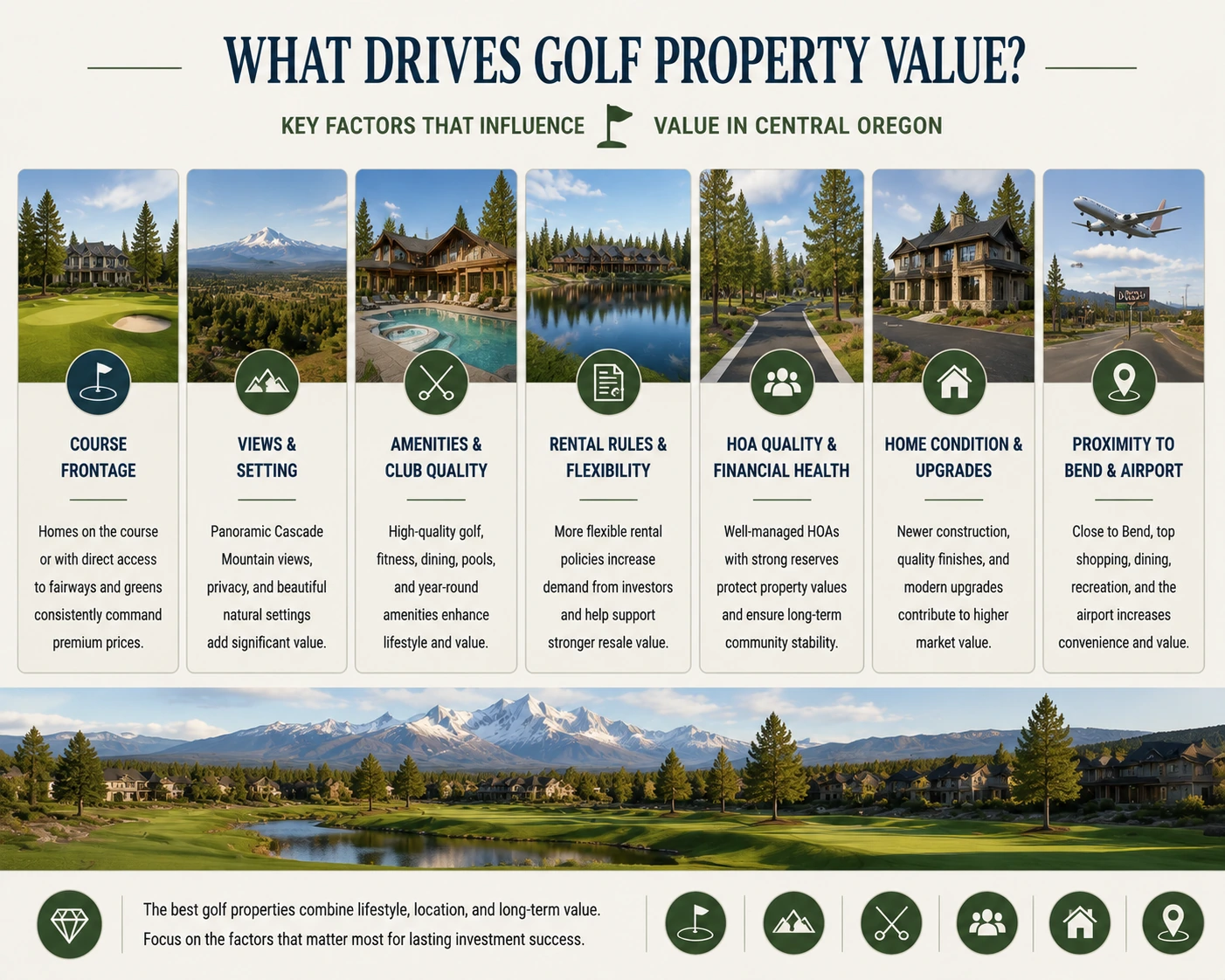
What Drives Golf Property Value?
Golf property value depends on more than square footage. In Central Oregon, lifestyle features can create meaningful differences between similar homes.
Course Frontage
Course frontage can increase appeal, but not all golf-front homes are equal. A home overlooking a fairway, green, or water feature may perform better than one exposed to noise or errant golf balls.
Buyers should evaluate:
- View direction
- Privacy
- Distance from play
- Sun exposure
- Outdoor living placement
- Safety and noise
Views
Views can be one of the strongest value drivers. Cascade Mountain views, fairway views, high-desert views, or river-adjacent scenery can all improve appeal.
Views are especially important in communities such as Tetherow, Pronghorn, Awbrey-area golf homes, and select resort properties.
Resort Amenities
Amenities can support both owner enjoyment and rental demand. Pools, spas, fitness centers, dining, trails, tennis, pickleball, and property management options may increase appeal.
However, amenities usually come with fees. Buyers should evaluate whether the amenities justify the carrying cost.
Rental Rules
Rental rules can dramatically affect investment value. A property that allows short-term rentals may appeal to a different buyer pool than one restricted to owner occupancy or long-term rental only.
Before purchasing, verify all rental rules directly.
HOA Quality
A strong HOA can protect community standards, maintain common areas, and support long-term value. A weak or poorly funded HOA can create risk.
Review:
- Budget
- Reserves
- Meeting minutes
- Pending assessments
- Maintenance plans
- Insurance coverage
- Rental rules
- Architectural guidelines
Home Condition
Condition is critical. Golf community buyers often expect homes to be clean, updated, and easy to enjoy. Dated homes may still be good opportunities, but renovation costs must be realistic.
Proximity to Bend or Airport
Location affects both resale and rental appeal. Bend communities may attract buyers wanting restaurants, trails, and westside amenities. Redmond-area communities such as Eagle Crest may appeal to buyers who value airport access and regional convenience.
Short-Term Rental Considerations
Short-term rental potential is one of the biggest questions for investment buyers. It can be attractive, but it is also one of the easiest areas to misunderstand.
Local Regulations
Short-term rental rules vary by city, county, and property type. Regulations may include permits, inspections, occupancy limits, parking rules, neighborhood restrictions, or license requirements.
Buyers should confirm current rules before making rental assumptions.
HOA Restrictions
HOA rules can be more restrictive than local regulations. Even if the city or county allows rentals, the HOA may limit or prohibit them.
Review the CC&Rs and rental policies carefully.
Resort Program Rules
Some resort communities offer rental or property management programs. These can simplify ownership, but they may include fees, furnishing standards, booking rules, blackout dates, or revenue splits.
Buyers should compare self-management, third-party management, and resort-managed options.
Management Costs
Vacation rentals require active management. Costs may include:
- Cleaning
- Maintenance
- Guest communication
- Booking platform fees
- Property management
- Utilities
- Supplies
- Repairs
- Furnishings
- Hot tub service
- Landscaping
Gross income is not the same as net income.
Seasonality
Central Oregon rental demand can vary by season. Summer, holidays, ski season, golf season, and school breaks may perform differently.
A property should be analyzed using conservative occupancy assumptions.
Occupancy Assumptions
Avoid relying on optimistic projections. Request actual rental history when available. If no history exists, compare similar properties and use realistic assumptions based on season, location, amenities, and rules.
HOA and Membership Costs
Golf community ownership often includes costs that standard homes do not. These costs can affect investment performance and resale appeal.
Monthly Dues
HOA dues may cover landscaping, roads, common areas, exterior maintenance, amenities, security, snow removal, insurance, or reserves. Coverage varies widely by community and property type.
Initiation Fees
Private clubs may require initiation fees for golf, social, athletic, or full membership categories. These fees can change and may be separate from home ownership.
Resort Fees
Resort communities may include additional fees, assessments, or amenity charges. Buyers should understand all recurring and one-time costs.
Maintenance Obligations
Golf homes may require more maintenance because of landscaping, decks, views, windows, outdoor living spaces, irrigation, or guest use.
Vacation rentals typically experience more wear and tear than owner-only homes.
Special Assessments
Special assessments can affect cash flow and total cost. Review HOA reserve studies, meeting minutes, and pending capital projects.
Financing and Ownership Structure
Financing a golf community property depends on whether it is a primary residence, second home, or investment property.
Second-Home Financing
Second-home financing may offer different terms than investment property financing. Lenders usually evaluate occupancy, personal use, location, income, and borrower qualifications.
Investment Property Financing
Investment property financing may require a larger down payment, stronger reserves, and different rates. Rental income may or may not help the qualification depending on documentation.
Insurance
Insurance can be more complex for resort, vacation, rural, or wildfire-exposed properties. Buyers should obtain insurance quotes early.
Important coverage questions include:
- Homeowners insurance
- Rental coverage
- Liability coverage
- Wildfire exposure
- HOA master policy
- Flood or water concerns
- Replacement cost
Tax Planning
Golf community investment buyers should consult a tax professional. Personal use, rental use, depreciation, expenses, passive activity rules, and ownership structure can all affect tax treatment.
LLC Ownership Considerations
Some investors consider LLC ownership for liability or estate planning reasons. However, lenders, HOAs, insurers, and tax advisors may have specific requirements.
Do not assume an LLC is automatically the best structure. Get professional guidance.
Risk Factors
Golf community investments can be rewarding, but buyers should understand the risks before purchasing.
Overpaying for Lifestyle
A beautiful home, fairway view, or resort setting can create emotional decision-making. Buyers should still compare market comps, total cost, rental potential, and resale value.
Rental Rule Changes
Rental rules can change. A property that allows short-term rentals today may face future restrictions from local government, HOA boards, or resort policies.
Higher Maintenance
Golf and resort homes often have higher upkeep. Large windows, decks, landscaping, guest use, hot tubs, and seasonal weather can increase maintenance needs.
Seasonal Demand
Vacation rental demand is rarely equal all year. Buyers should prepare for slower seasons and budget accordingly.
Competition From Resorts
Vacation rentals may compete with hotel rooms, resort lodging, professionally managed homes, and other short-term rentals. Guest expectations can be high.
Liquidity at Resale
Some golf homes have smaller buyer pools. High HOA fees, rental restrictions, or unusual layouts can reduce resale liquidity.
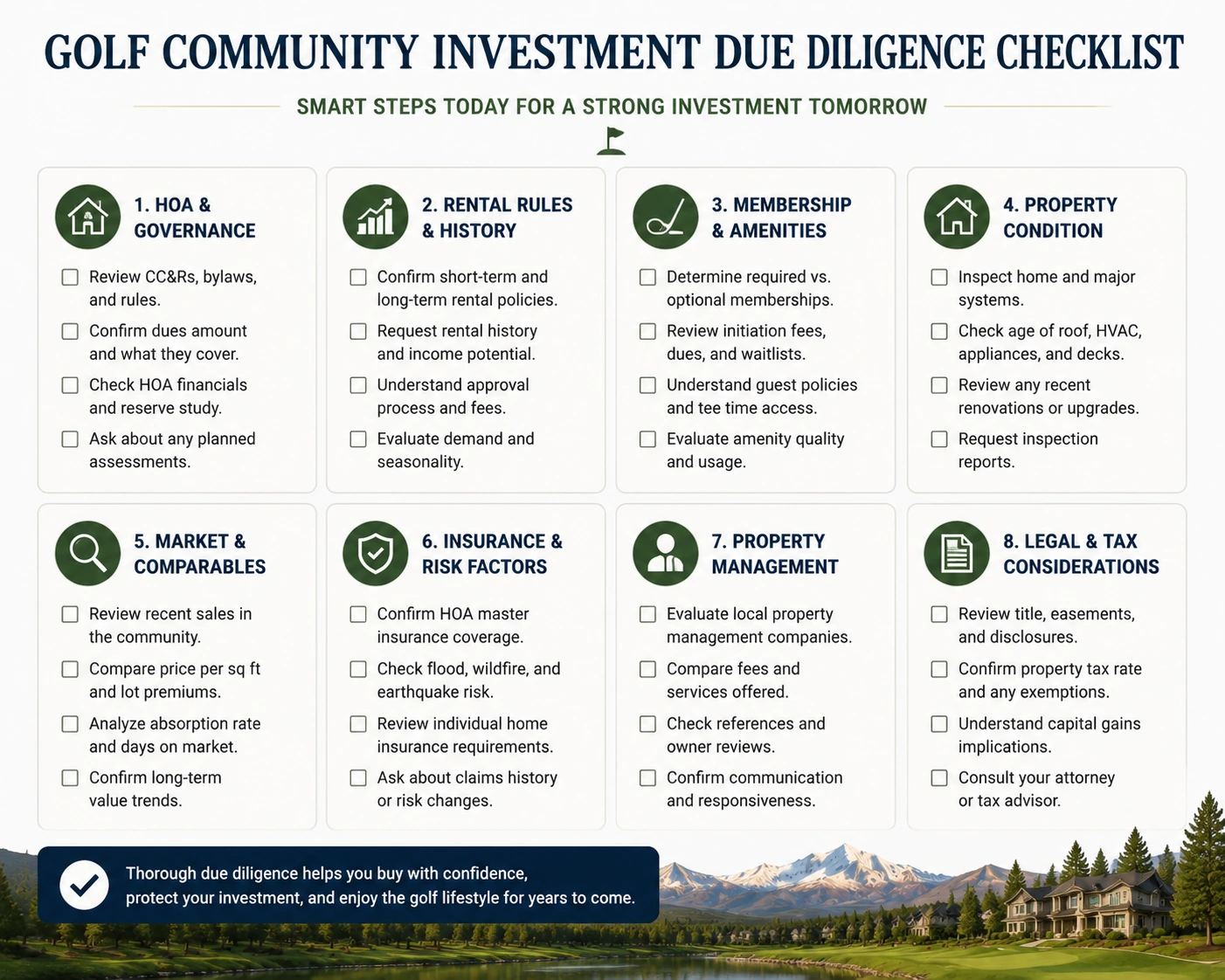
Buyer Due Diligence Checklist
Before purchasing a golf community investment property, buyers should complete a thorough due diligence process.
HOA Documents
Review:
- CC&Rs
- Bylaws
- Budget
- Reserve study
- Meeting minutes
- Rental rules
- Architectural guidelines
- Assessment history
Rental History
If the property has been rented, request:
- Gross rental income
- Net income
- Occupancy
- Average daily rate
- Management fees
- Cleaning costs
- Maintenance costs
- Booking source
- Seasonality
Club Membership Rules
Verify:
- Membership availability
- Initiation fees
- Monthly dues
- Transfer rights
- Waitlists
- Guest rules
- Golf access
- Athletic or social access
Property Condition
Inspect carefully for:
- Roof
- HVAC
- Windows
- Decks
- Exterior siding
- Foundation
- Drainage
- Irrigation
- Appliances
- Furnishings
- Hot tubs
- Fireplaces
Market Comps
Compare the home against recent sales, active listings, price reductions, days on market, and rental-eligible properties.
Insurance and Wildfire Risk
Get insurance quotes early, especially for homes near forested areas, rural locations, or resort settings.
Property Management Options
Interview property managers before purchasing if you plan to rent. Understand fees, services, response time, guest support, and maintenance coordination.
Best Buyer Profiles
Golf community investment properties are not one-size-fits-all. They work best when the buyer’s goals match the property and community.
Lifestyle Investors
Lifestyle investors want the property to provide enjoyment and financial upside. They may rent occasionally, but they primarily want a home their family will use.
Retirees Planning Future Use
Some retirees buy before moving full time. They may use the property seasonally at first and eventually transition into full-time ownership.
Remote Professionals
Remote professionals may choose golf communities because they offer quiet settings, home office space, recreation, and airport or Bend access.
Golfers
Golfers value proximity to the course, practice facilities, club culture, and the ability to play regularly. For them, the investment return includes personal enjoyment.
High-Net-Worth Second-Home Buyers
High-net-worth buyers often prioritize scarcity, architecture, views, privacy, and long-term value over short-term cash flow. They may be most interested in Tetherow, Pronghorn, Broken Top, or luxury Bend golf homes.
Frequently Asked Questions
Golf homes in Bend can be good investments when they have a strong location, views, community appeal, updated condition, and long-term resale demand. They are not always strong cash-flow properties because purchase prices, HOA dues, and maintenance costs can be high.
It depends on the community, HOA rules, local regulations, and property type. Some golf homes may allow short-term rentals, others may restrict rentals, and some may only allow long-term leases. Always verify before purchasing.
There is no single best community for every investor. Tetherow may appeal to modern luxury buyers, Broken Top to gated Bend buyers, Pronghorn to resort buyers, Eagle Crest to vacation-home and Redmond-area buyers, and Meadow Lakes to value-focused golf buyers.
HOA fees can be worth it if they protect community quality, maintain amenities, support property values, and reduce owner maintenance. They become a problem when fees are high, reserves are weak, or the services do not match your ownership goals.
Tetherow can be attractive for buyers seeking modern Bend luxury, golf, resort amenities, and long-term lifestyle appeal. Buyers should carefully review HOA rules, rental restrictions, pricing, and total ownership costs.
Eagle Crest can be attractive for vacation-home buyers because of its resort amenities, golf, pools, trails, and Redmond-area location. Rental rules, HOA restrictions, management costs, and seasonality must be verified before purchasing.
That depends on your goals. Many Central Oregon golf community buyers purchase for lifestyle and long-term appreciation rather than pure cash flow. If cash flow is your primary goal, analyze rental income conservatively and include all expenses.
Final Thoughts
Golf community investment properties in Central Oregon can offer a compelling mix of lifestyle, recreation, scarcity, and long-term value. But they require more careful analysis than standard residential investments.
A golf home may look attractive because of fairway views, resort amenities, or personal enjoyment. The investment only works if the numbers, rules, ownership costs, and resale profile also make sense.
For buyers considering Bend golf community investment opportunities or vacation rental golf homes in Central Oregon, the best strategy is to start with your goal. Decide whether you are buying for cash flow, appreciation, personal use, retirement planning, or a blend of all four. Then compare communities, review HOA and rental rules, evaluate property condition, and use conservative assumptions.
The strongest investment is not always the most expensive home or the most famous golf community. It is the property that fits your lifestyle, budget, risk tolerance, and long-term plan.